Dir: Robert Mandel. Star: Craig T. Nelson, Lynne Thigpen, Roger Aaron Brown, Nastassja Kinski.
This was an almost lost item, which I seemed incapable of tracking down either official or through “the usual sources.” I eventually stumbled across a complete set of The District episodes while I was playing around with the Kodi app on my phone – but by the time I got round to watching it, the particular Kodi repository had been shut down. I re-installed another repo, and was just getting ready to look for it again. So, I googled the title to remind me of the season and episode number… and discovered it had been uploaded to DailyMotion in the meantime. I’m glad to cross it off the list, though it would be a stretch to call this worth the effort.
The District is an American crime drama and police procedural television series which aired on CBS from October 7, 2000, to May 1, 2004. The show followed the work and personal life of the chief of Washington, D.C.’s police department. I begin with this information – shamelessly cribbed from the Wikipedia page about the show – because I had never heard of it before seeing it on Nastassja’s filmography. I had certainly never seen an episode, which perhaps explains why I was largely bemused by watching this solitary entry. It was the eighth episode on the second season, originally airing on November 24, 2001.
Kinski’s role is an odd one, entirely unconnected to the main story, which is about a gang of designer purse snatchers, preying on Washington transit riders. But that seems to be the way the show works, and it’s not necessarily unique in this approach among American police television. The individual episodes will focus on a particular case, but the investigation will also interlaced with other plot arcs, which may run across the course of multiple shows. The 44-minute running time here, for example, also included a thread about a cop who receives a gift of a watch, which may break department rules about such things; and also a more light-hearted subplot concerning the proceeds of an office football pool.
Overly Attached Kinski
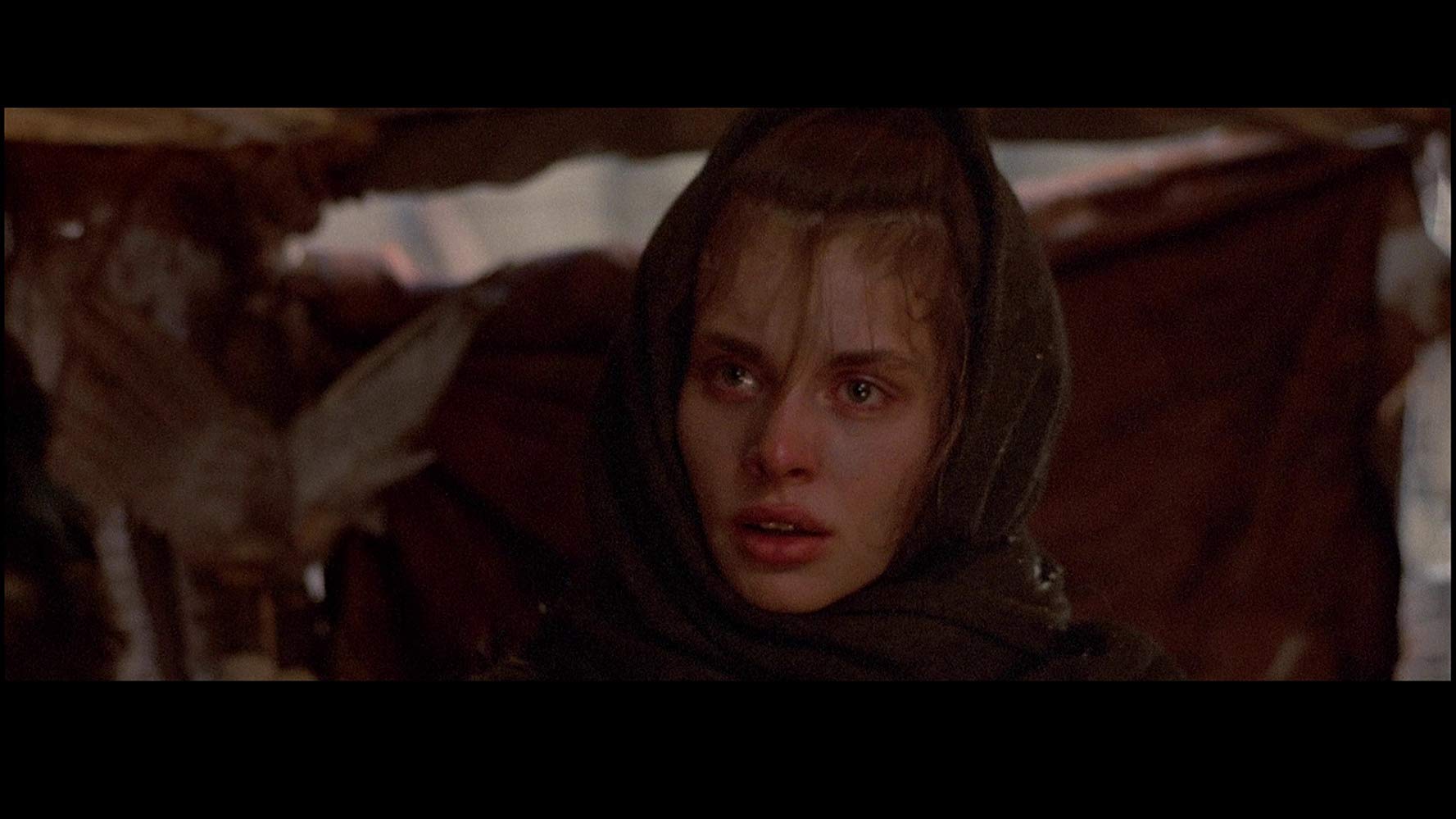
She plays Trish, an old flame of the main character, Jack Mannion (Nelson) – he refers to her as an ex-fiancee, though it feels more like an Overly Attached One-Night Stand to me. She turns up in his office at the police department, having heard that his ex-wife, Sherry, with whom he still has an on and off relationship, has left him. Initially, Trish tries to convince Jack that she is entitled to a share in his restored tugboat, the Betty-O, on which he lives. He dismisses Trish’s claim as one of her “delusional episodes,” but she’s completely unfazed by his rejection, and shows up on the boat [I’d say, for a chief of police, his security protocols seem almost non-existent!]. She’s cooking him dinner, which leads to the following exchange:
“Is there rabbit in there?” “Mmm, Fatal Attraction. I loved that movie” “You are that movie…”
As the above suggests, Jack makes absolutely no bones about the fact that he considers Trish to be thoroughly unhinged. It’s a product of its era, I suspect: these days, it seems less likely a TV series would use apparent mental illness as comic relief. Part of me also finds it a bit rich, considering that on the basis of this episode, Mannion seems to have issues of his own. For example, he dresses up as Geppetto – fake mustache and all – in order to make a point to one of his officers. That doesn’t exactly seem normal behavior for a chief of police, though the character was apparently loosely based on Jack Maple who was a New York City deputy police commissioner, and helped create the series.
There are four scenes together in total; three on the boat and one in the office, which makes me think Nastassja probably didn’t have to leave Los Angeles for this job [despite its setting, the show is mostly filmed in LA, save for necessary exterior shots]. The third is probably the most poignant, as Jack tries to explain to Trish that, despite Sherry’s absence, she remains his soulmate, and not someone who can be replaced: “I’m always going to love her.” There’s a fleeting moment where it looks like he has broken through, finally making her understand, and the range of emotions flickering across Trish’s face is palpable. Then it’s gone, as the middle-aged manic pixie dreamgirl returns. [It’s another older man scenario, with Nelson approaching 17 years older than Kinski]
It includes the final scene in the episode, with Trish finally apparently getting the hint and leaving. Though even there, the couple bicker about whether or not Jack is going to take her to the airport. It does feel a little forced, and you wonder how the hell these two people got together to begin with, let alone what led Jack to propose marriage,. It does feel almost as though Trish was intended to be some kind of recurring character, This episode seems more like they are introducing her, rather than providing a fully-formed arc. However, there are some other famous names who also appeared only once, including Ernest Borgnine, John Savage and Danny Trejo, so it may just be the series’s approach to some of its guest stars.
I do have to say, while competent enough, there’s not much here which would compel me to watch any further episodes. Outside of Mannion’s eccentricities, there was little in this forty-five minutes to differentiate it from the host of other shows featuring police departments and their work. I’m quite surprised it lasted as long as four seasons, especially buried in the death slot which is Saturday evening. Nice of the makers to think of Kinski though, and it was probably one of her more high-profile TV appearances, albeit amounting to less than ten minutes, all told. And below, you can find all ten of them.
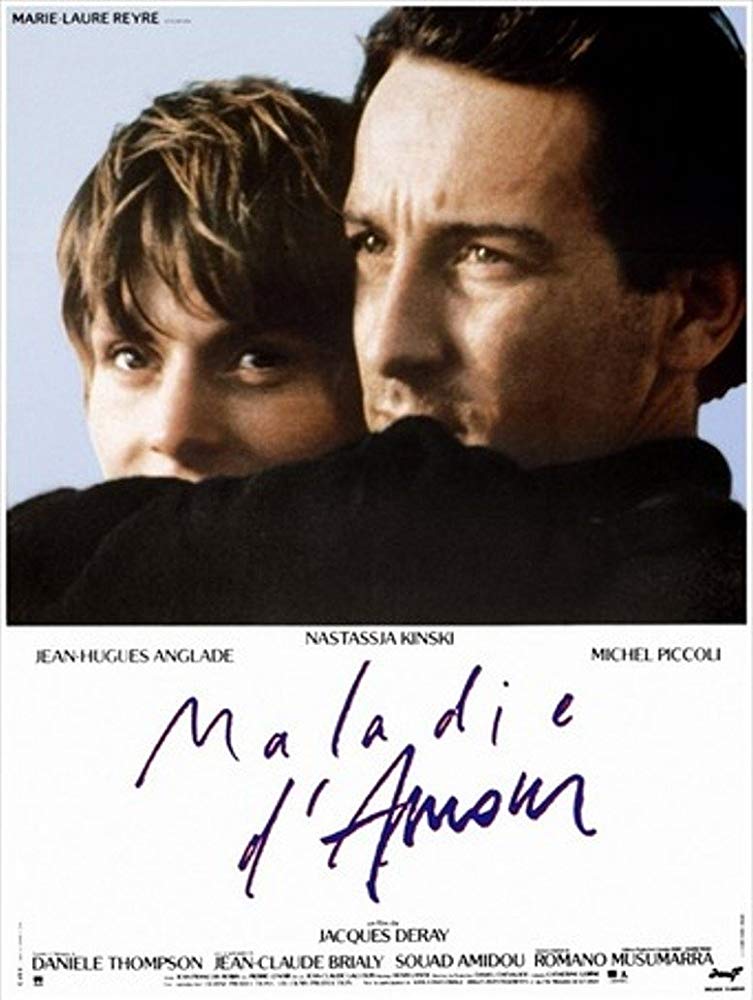
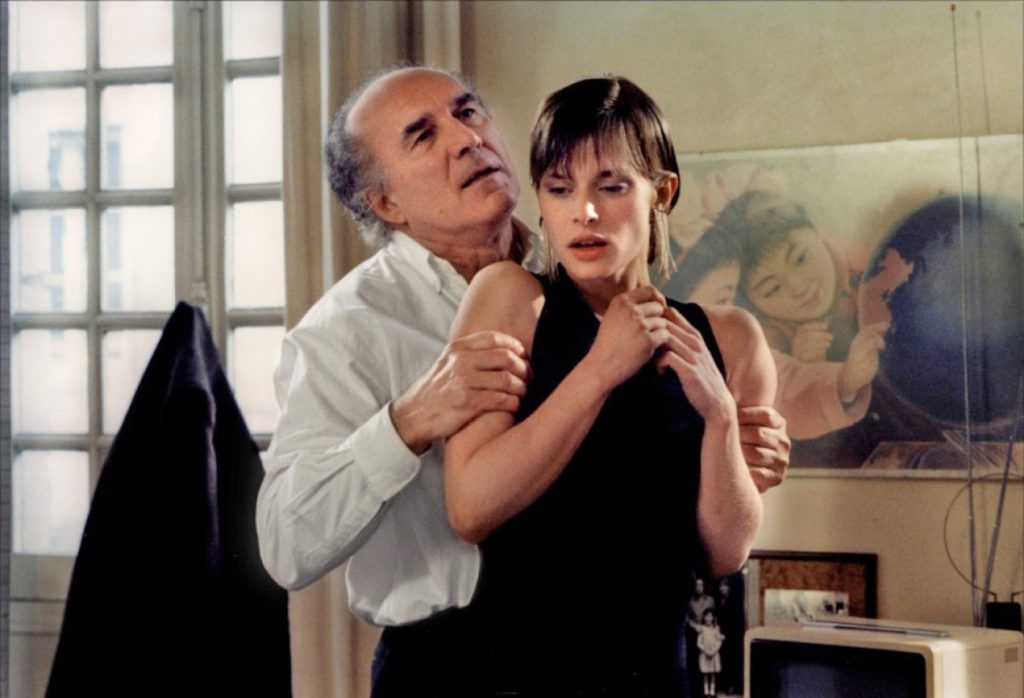
Dir: Jacques Deray Star: Nastassja Kinski, Jean-Hugues Anglade, Michel Piccoli, Jean-Claude Brialy
In which we learn, that everyone in France is a slut.
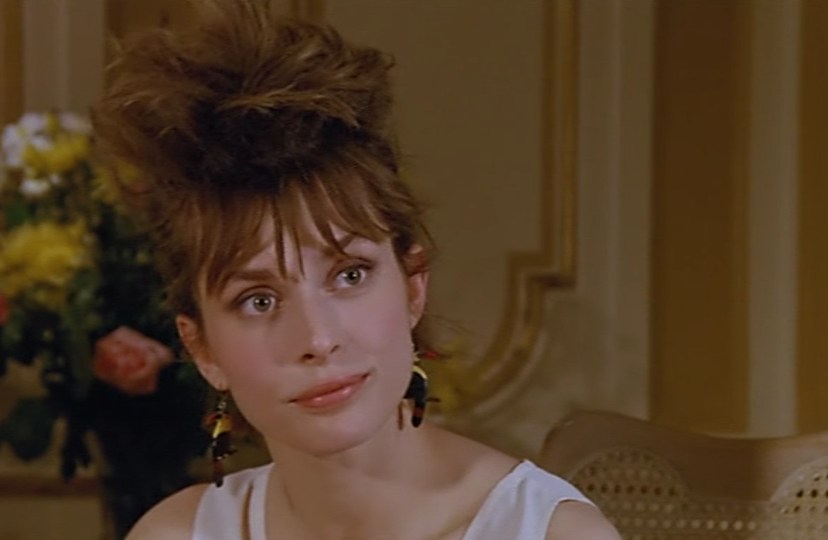
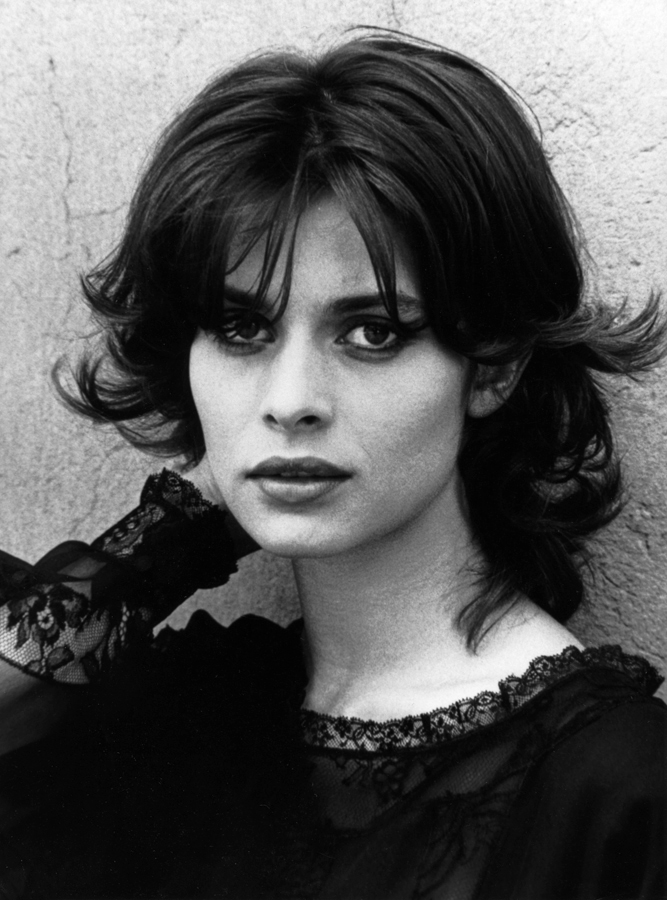
Okay, maybe that’s an exaggeration. But it sure seems like it here: in the love triangle between hairdresser Juliet (Kinski), and doctors Clément (Anglade) and Raoul (Bergeron), fidelity is low on the list of priorities for everyone. Clément has an “almost fiancée,” and Raoul is flat-out married: these existing relationships hardly appear to present the slightest impediment to either man getting involved with Juliet. Meanwhile, she bounces between the two of them like a elaborately coiffed shuttlecock (if, like me, you’d forgotten this was an eighties film, some of her hairstyles will quickly remind you; an example can be seen below), as her whims appear to dictate. It’s like she’s forever requiring a second opinion.
You can argue who has the prior claim. Clément is the first to see her, sharing a carriage and a “strangers on a train” moment on their way in to Bordeaux. But it’s Raoul who is the first to engage with her, being a customer at the salon where Juliet works. However, it isn’t long before the smarts gulf between a highly-respected oncologist and a hairdresser starts to prove problematic. When the pet dog he gives her dies (it belonged to a late patient of his), Raoul isn’t around to comfort her. Clément is, leading to a passionate session, word of which unfortunately, gets back to Raoul. He calls the subordinate doctor into his office and berates him about the deceased canine. “He had a first-class funeral. Two beautiful young undertakers. They fucked on his grave, then went to a hotel.”
Seeing his career evaporating in front of his eyes, Clément backpedals desperately, saying “That didn’t count. It was just playing around… It was nothing,” which counts as a bit of a dick move, I’d say. It is, however, orders of magnitude better than Raoul’s behavior: for he has been tape-recording the conversation, and rushes home to play it to Juliet. She’s not happy with his dismissal, needless to say, and breaks off their affair. However, a little further down the road, she makes up with Clément; he abandons his specialist’s position to avoid reprisals from Raoul, in favor of general practice in a small French town. For a brief while, they appear to be happy. But wouldn’t you know it? She gets bored of life as a provincial housewife, after he wants to have a child, and heads back to Bordeaux, to be with Raoul once again.
Really? I know it’s eighties Kinski and all, but c’mon. There’s a certain point at which any sensible person would have to say: “If you don’t want to be with me, then I don’t want to be with you.” The film’s biggest weakness is its failure to get over to the viewer why both these men – successful professionals, presumably wealthy and not exactly ugly – are so completely obsessed with Juliet. Physical attraction goes only so far, especially in the apparent absence of other qualities. She is clearly not an intellectual foil for them (she names her dog Levi Strauss – not after the philosopher, but for some unexplained reason, the jeans), and displays little or no personality to speak of. If there had been some kind of adversarial relationship established between Raoul and Clément, with Juliet as a trophy, even that would have been an improvement on what the film offers.
Then, just as I’m growing increasingly annoyed by this, the film goes for the nuclear option of cinematic clichés. What else could it be, when a woman is being fought over by a pair of cancer doctors? If you guessed “Juliet gets cancer,” give yourself two points, whenever you’ve finished rolling your eyes. It was cynical emotional manipulation in 1970, when Ali McGraw went down with leukemia, and has become increasingly trite and ineffective since. Here, there’s almost no emotional impact, since the movie has given you little or no reason to care about Juliet, up to that point. The rest of the movie plays out like a Lifetime ‘Disease of the Week’ TVM, except that Raoul is rewarded for his ceaseless efforts to help Juliet find a cure, by her bailing on him, and running back to the provincial doctor’s house.
I started this project back in the summer of 2013, and from the start it was clear Maladie d’Amour was going to be one of those “lost” Kinski films, apparently unavailable with English subtitles. After more than five years, I had given up hope when, just a couple of weeks for before the site officially launched, I discovered someone on one of those grey-market film sites had created a set of fan subs for it. My delight knew no bounds… until I watched what has to be considered one of her weakest efforts of the decade. I’m not sure who deserves blame. The three actors who form the triangle all have solid track records, and Deray has as well. However, the latter is far better known for crime movies and thrillers, with the likes of Alain Delon and Jean-Paul Belmondo. The results here are evidence that crafting a tragic love story requires a different set of cinematic skills altogether.
Equal criticism should probably be directed at the screenwriters, Danièle Thompson and well-known Polish film-maker, Andrzej Żuławski, most famous for directing Possession, starring Isabelle Adjani and Sam Neill. Their script knows where it wants to go, aiming for a poignant ending – it reminded me a little of Tess, in its doomed heroine, taking up residence in an empty house. It just has no clue how to get there, pushing the characters around in the apparent hope of generating a spark to set things ablaze. This film apparently relies on the charisma of its actors to make up the deficit: for whatever reason, that doesn’t happen, with Nastassja delivering one of her most uninterested performances. This one definitely was not worth waiting five years to see.
Below, you’ll find 50+ trailers and other clippage of films, covering the majority of Nastassja’s filmography – if you haven’t seen any of them, they’ll give you an idea of whether or not you want to track the movies down. Most are the official trailers, where available; where not, I’ve tried to find compilations of footage. However, there are a few which still completely escaped my YouTube search skills – the TV movies and European films were especially hard to track down. So if you find any that are not included, please let me know, as I’d like this to be as complete as possible.
Obviously, the trailer contain varying amounts of Kinski, depending on the importance of her role. Some, such as Playing By Heart, are down at the “may contain traces” level, where if you blink, you might miss her entirely. Then again, that’s a fairly accurate representation of the film too!
“She rose to the occasion. The snake rose to the occasion. I rose to the occasion.”
— Richard Avedon
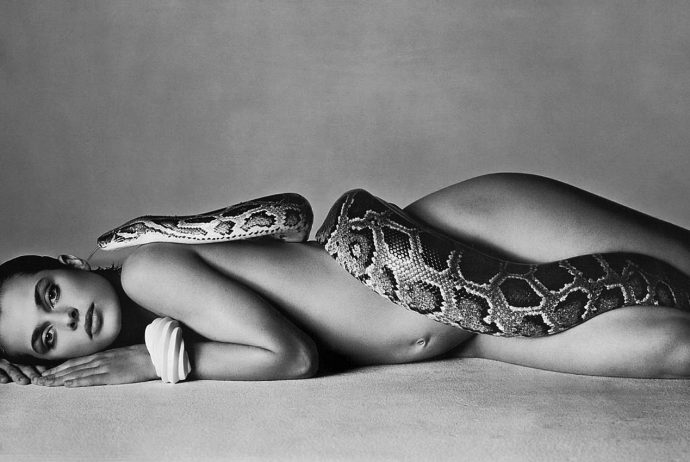
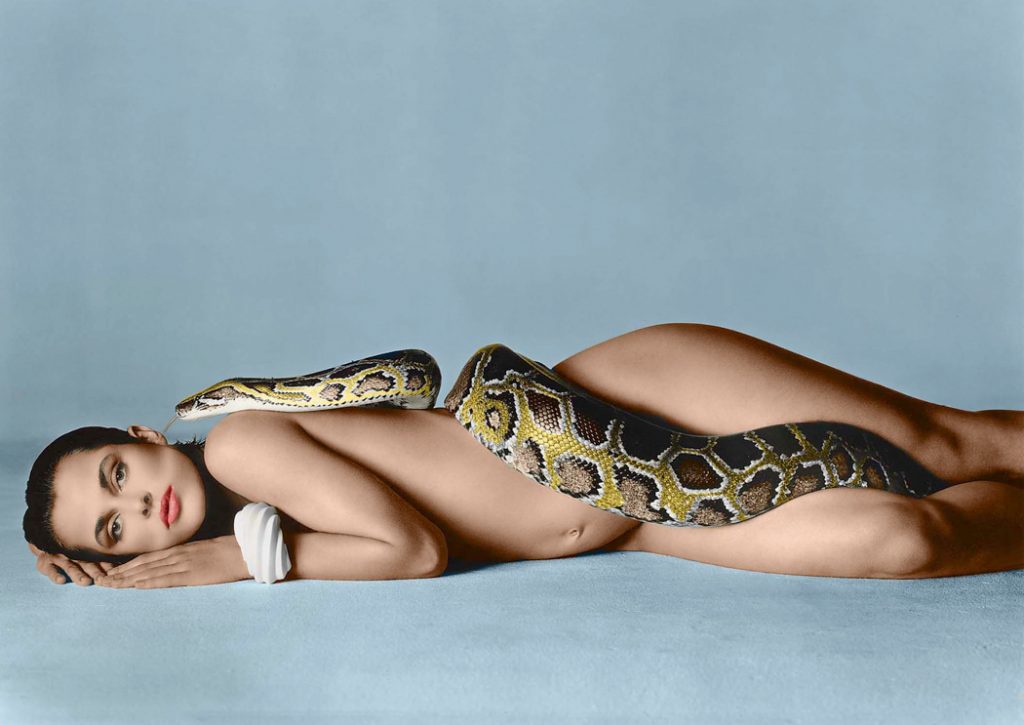
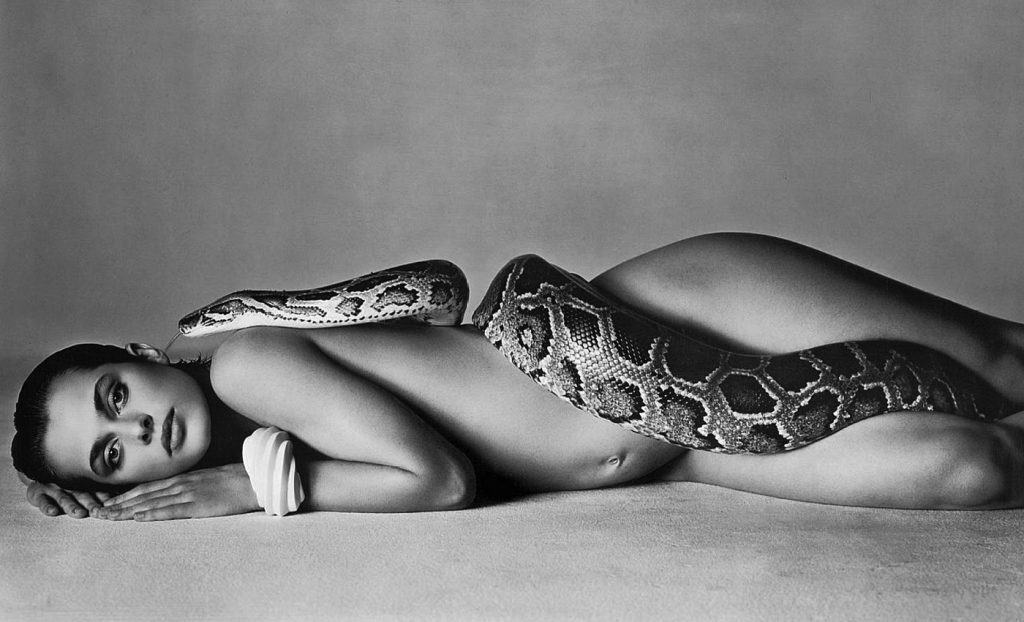
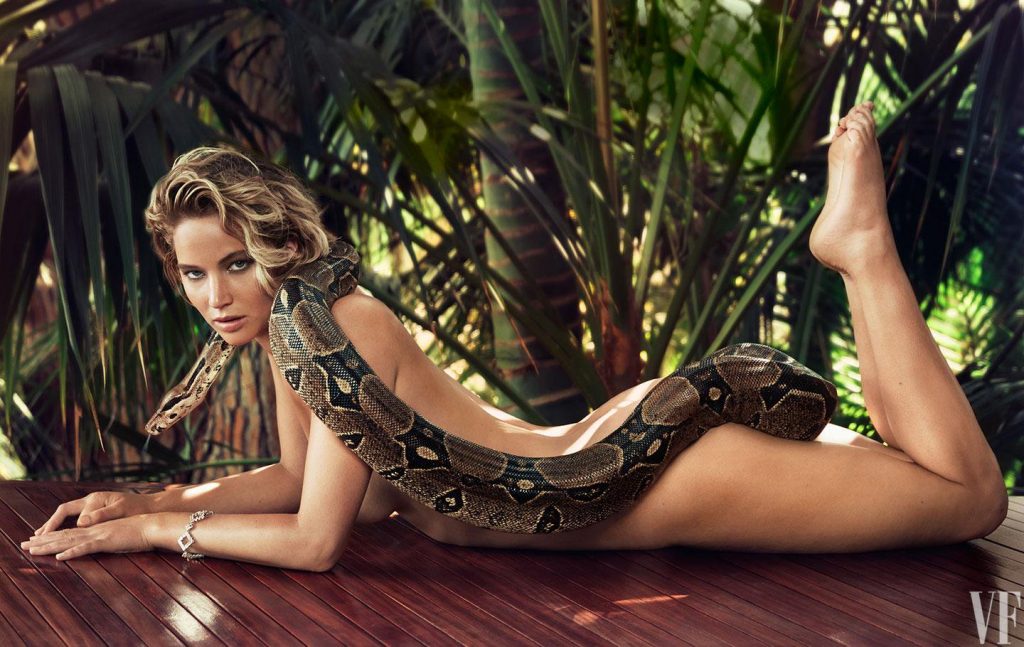
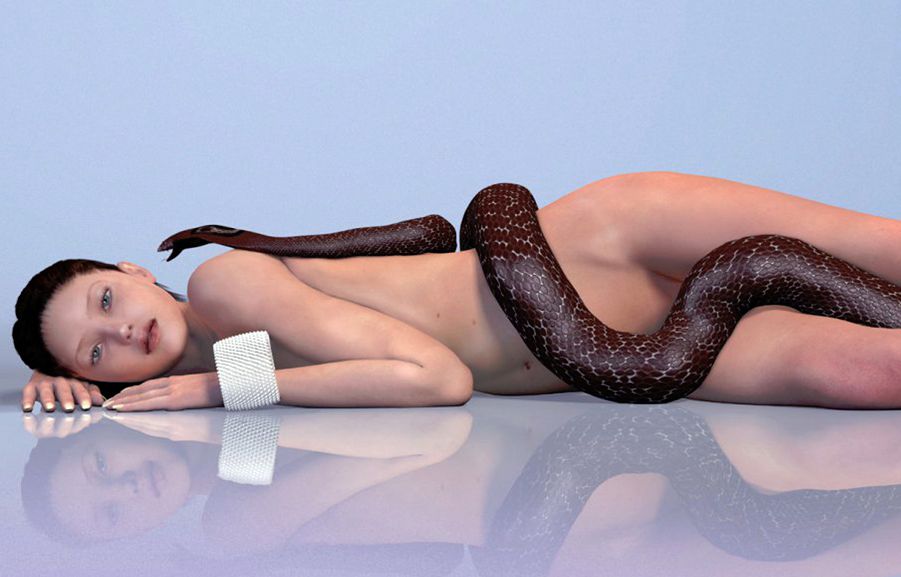
There is no more iconic image of Nastassja Kinski than the portrait of her, naked – save for a Patricia von Musulin bracelet – with a Burmese python decorously wrapped across her, its tongue flicking into Kinski’s ear. The photograph was taken by renowned photographer Richard Avedon on June 14, 1981, in a shoot for Vogue magazine, and became one of the best-selling posters of the decade. It subsequently inspired a host of other women to adopt similar poses, including Nastassja’s daughter, Sonia, and in a 2014 shoot for Vanity Fair, Jennifer Lawrence. But nor was its imagery created out of nowhere. Let’s look at what came before, as well as the act of its creation, and those which followed in its wake.
The origins of the archetype
Intertwined with a boa constrictor, grappling with temptation, seduction and power, Kinski is clearly referencing deeply rooted concepts in classical art and mythology. — Sotheby’s catalogue, February 2018.
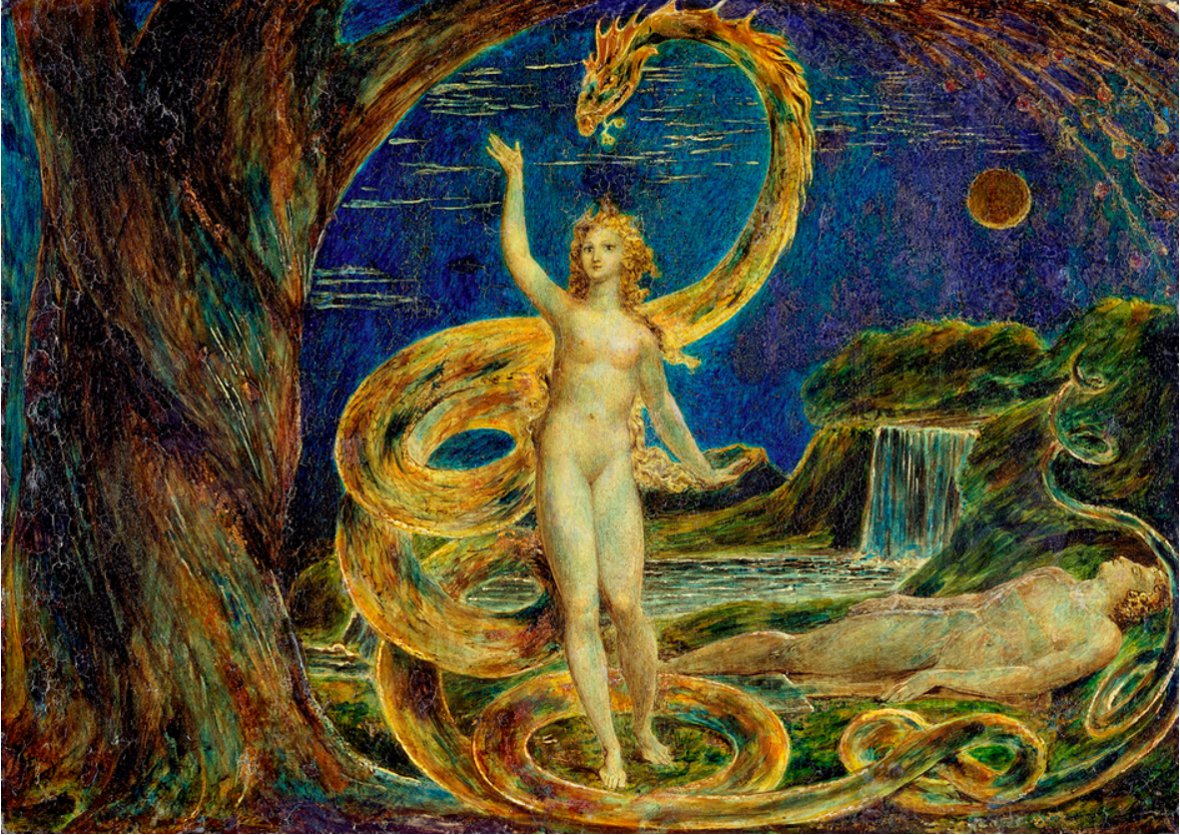
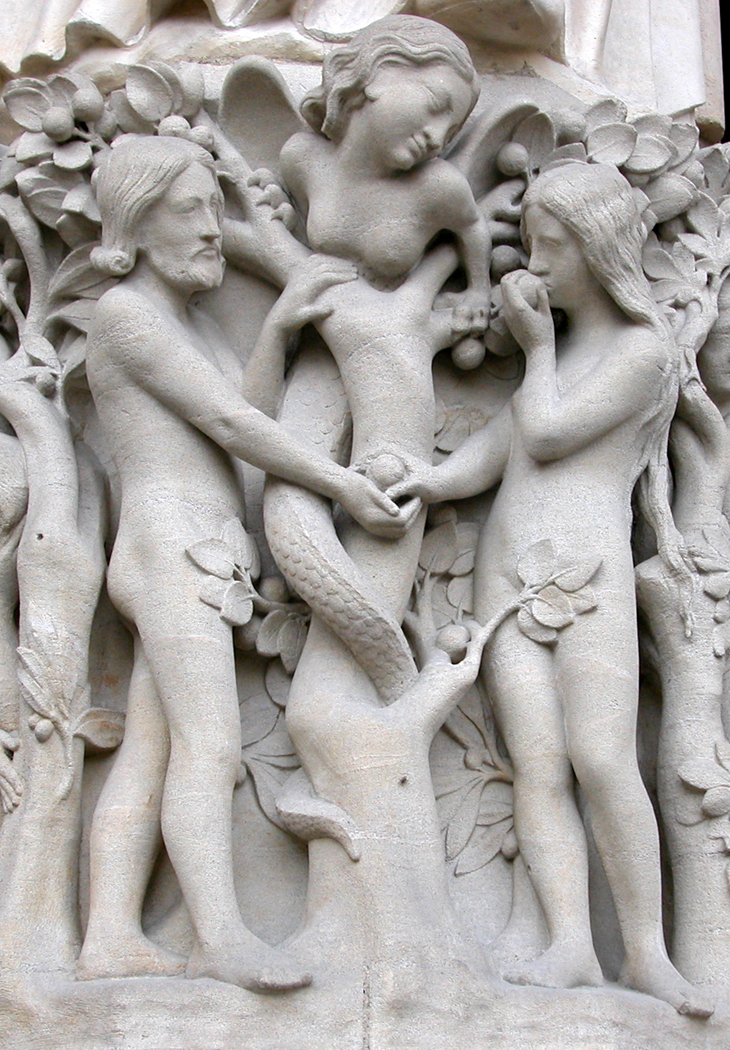
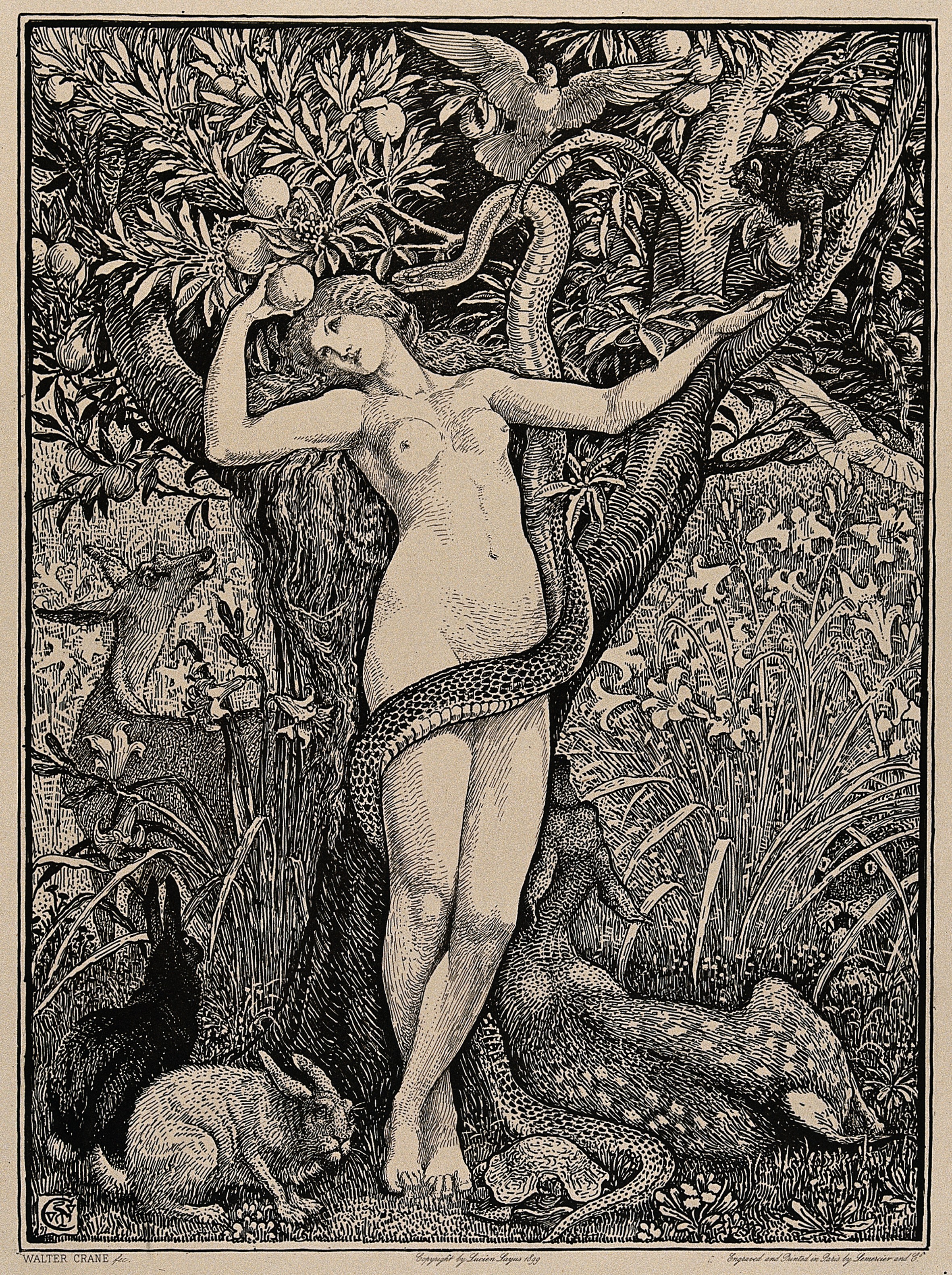
Women and snakes have been connected for, literally, thousands of years. The most obvious link is the story of Adam and Eve in the Garden of Eden, where Satan, in the form of a serpent, convinced Eve to pick forbidden fruit from the tree of knowledge. But Christian mythology is certainly not the origin of the archetype. As with much of Christianity, this story may have been a more or less conscious co-opting of pre-existing traditions, turning one of the numerous pagan snake deities, such as the Sumerian Nirah, into the villain of the piece.
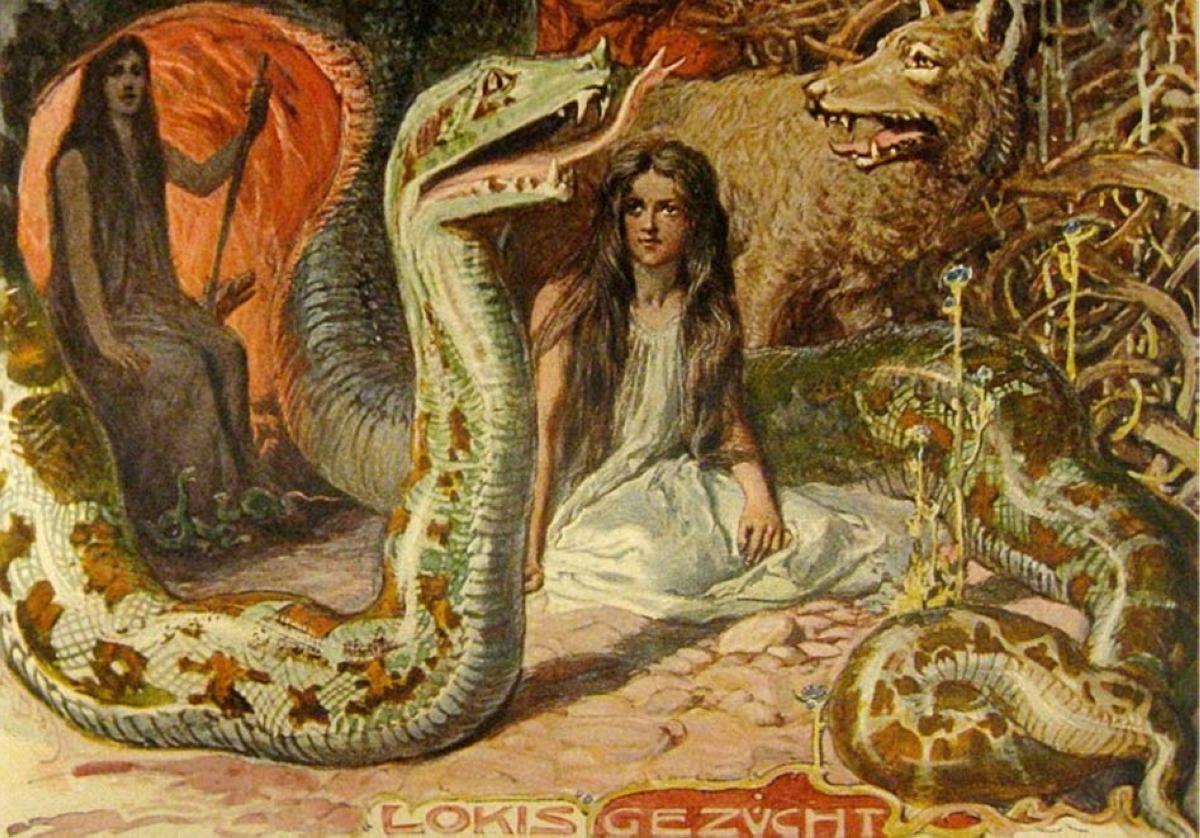
Tales of women and snakes span the globe and the centuries, often depicted in a more positive light than by Judeo-Christian lore. The indigenous Pomo tribe of California have a legend telling of a woman who married a rattlesnake-prince, and gave birth to four snake-children. Or in Africa, we find water deity Mami Wata, about whom Wikipedia says, “A large snake frequently accompanies her, wrapping itself around her and laying its head between her breasts.” Perhaps the most iconic of mythological reptile/female combinations is Medusa, a woman with living snakes for hair – and much like Nastassja in the photo, her gaze could turn a man to stone.
It’s perhaps worth quoting at some length what Plutarch wrote about Alexander the Great’s parents, Olympias and Philip, around the beginning of the second century AD: “Once, moreover, a serpent was found lying by Olympias as she slept, which more than anything else, it is said, abated Philip’s passion for her.” He goes on to state Olympias was a member of a snake cult and, “was wont in the dances proper to these ceremonies to have great tame serpents about her, which sometimes creeping out of the ivy in the mystic fans, sometimes winding themselves about the sacred spears, and the women’s chaplets, made a spectacle which men could not look upon without terror.”
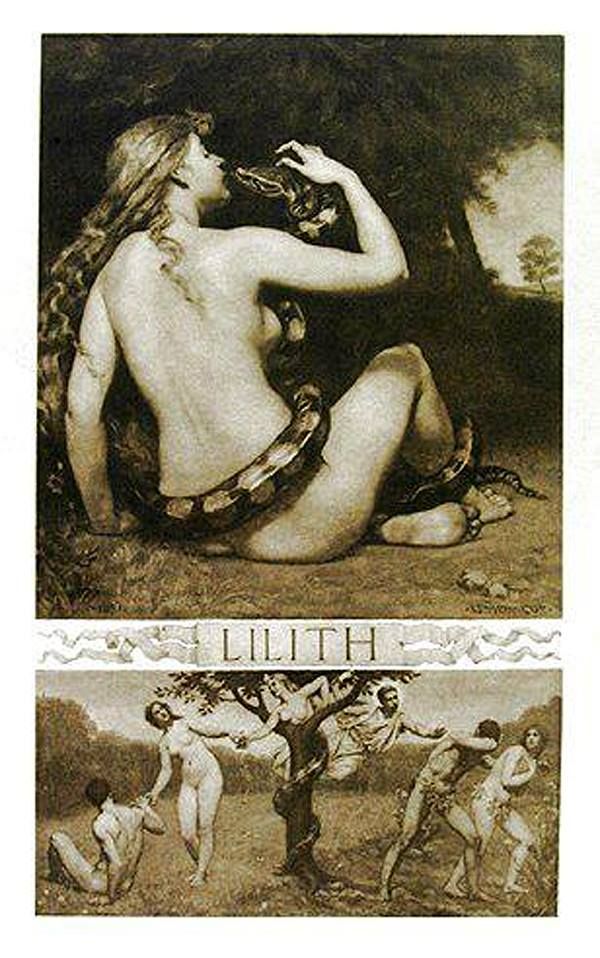
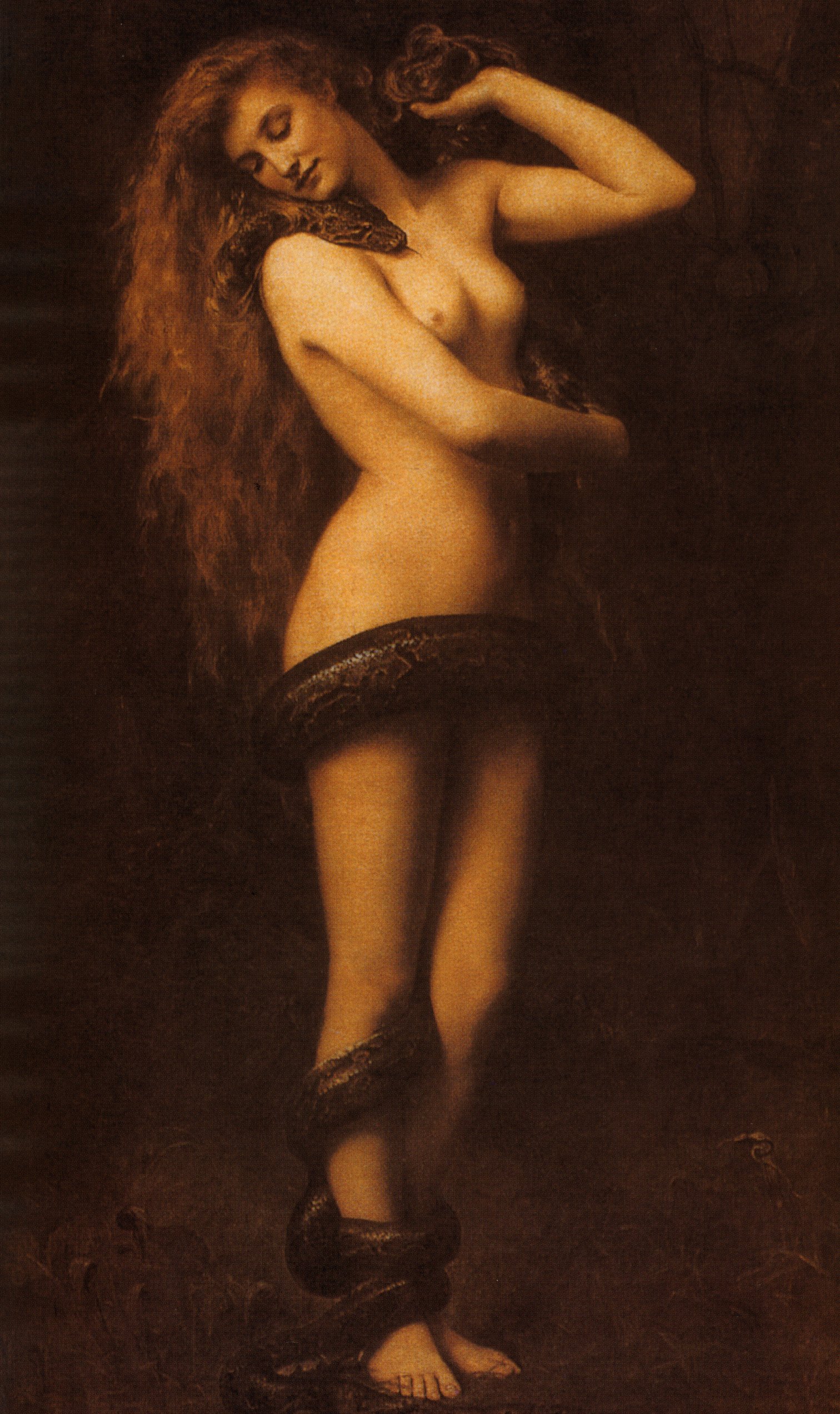
As far as Christian mythology is concerned, there’s an argument Kinski is less playing Eve than Lilith, a character first mentioned in Babylonian saga, The Epic of Gilgamesh, which dates back to 2400 BC. While only briefly mentioned in the “official” Bible, other religious works name her as Adam’s first wife. The Zohar, the main text of the Kabbalah, associates Lilith with Samael, King of the Demons, and says [emphasis added], “The female of Samael is called ‘snake,’ ‘a wife of harlotry,’ ‘the end of all flesh,’ ‘the end of days.'” As a result, many depictions from the Middle Ages, portray the snake with Lilith’s face, including Michelangelo’s Temptation and Fall in the Sistine Chapel. In recent times, Lilith has been reclaimed by feminists as a symbol of independence from the dominion of men and sexual freedom. Quite the journey for a five thousand year old, Babylonian she-demon.
In terms of artistic depictions, the other main item combining women and snakes is probably the death of Cleopatra – or as it was once called, “the greatest asp disaster in the world”… However, size does matter when it comes to snakes, and the fun-sized reptiles with which she is shown, appear to be from a different sub-genre. We should also mention in passing the extremely obvious Freudian symbolism. Creative director Polly Mellen, who was helping Avedon out that day, says, “When she held it, there was something really sensual about the snake. I don’t want to be vulgar, but… it reminded me of something else.”
Such elements are particularly apparent in Gustave Flaubert’s novel, Salammbo, about a Carthaginian priestess. For your consideration: “The python turned downwards, and resting the centre of its body upon the nape of her neck, allowed its head and tail to hang like a broken necklace with both ends trailing to the ground. Salammbo rolled it around her sides, under her arms and between her knees; then taking it by the jaw she brought the little triangular mouth to the edge of her teeth, and half shutting her eyes, threw herself back beneath the rays of the moon… Salammbo panted beneath the excessive weight, her loins yielded, she felt herself dying, and with the tip of its tail the serpent gently beat her thigh.”
Which seems like a good point to move on, pausing only to mop our brows.
The shoot
He was probably the only person who could have told me to take my clothes off and lie on the floor with a snake—and I’d do it. — Nastassja Kinski
There seems to be some doubt as to who came up with the idea of using a snake for the picture. Kinski recalls it being Avedon’s idea: “We were in the studio with designer clothes and makeup and jewelry. But he suddenly said, ‘This is not happening for me.’ He made a few phone calls, and before you know it we had a snake in the studio.” Mellen remembers things differently. While she agrees with Nastassja that the session started as a normal fashion shoot, she remembers asking the model, “Do you have any special things that you like?” to which Kinski replied, “I like snakes.”
A reptile was duly procured, and Avedon then asked Kinski if she was willing to be photographed in the nude. She agreed – but getting her co-subject to comply proved to be quite another matter. According to the photographer, “It all looks so easy. She spent two hours on a cement floor, naked. The trainer would start anchoring the snake with her ankles, and then see where the snake would go. Hope that the snake — because there’s no talking to a snake — would creep up Nastassja in a way that was beautiful… It was really fashion hell.”
But finally the miracle happened, as the snake wound its way up unto her shoulder. Avedon says, “It was one of those absolutely magical things that happens, which nothing you plan could equal… I said, ‘Nastassja, this is it. Quickly, relax!'” Mellen was dumbstruck by the moment: “You couldn’t imagine being there. I mean, the snake kissed her! The snake wound up her little naked body and put its tongue in her ear, and the picture was done. I couldn’t believe what I was seeing.” However, Mellen later said she regretted the presence of the bracelet: “It became a fashion statement, and I thought the picture was something else.”
She also says, “The snake had been defanged, so there was no worry on that stance.” While she may know a great deal about fashion, she apparently doesn’t know much about snakes. For the Burmese python is non-venomous and kills its prey by constriction, wrapping its powerful body around them, and squeezing so that are unable to breathe. Its fangs are not the “worry” here. What probably does concern me though, is the number of sources who report to this day that Kinski was pregnant during the shoot. Looking at her belly, that seems plausible: except there’s a problem. Her first child, Ayosha, wasn’t born until July 1984, more than three years later. No explanation for this is comforting.
Even the title of the piece is thoughtful, deliberately using “serpent”, perhaps to evoke the Biblical images. It’s not an insignificant difference. One lexicographer observed that “snakes are insidious, cold and contemptible, while serpents are terrible, powerful, and beautiful.” While it hatched a million posters – actually two million, by one estimate – if you want one of the original prints, whose run was limited to only a couple of hundred, you’ll have to save up a bit more money. In a February 2018 auction at Sotheby’s, #52 was sold for £62,500.
The clones
Watch her take the pleasures from the serpent, that once corrupted man… — Blade Runner
We’ve established that Avedon and Kinski were certainly not the first to create art combining women and snakes, and equally certainly, they were not the last. However, their collaboration changed the landscape forever, with every subsequent such piece apparently taking influence from them. It’s similar to how movies had included scenes in showers before Alfred Hitchcock went there for Psycho But after he did, nothing was the same: to this day, if someone picks up a kitchen implement to use as a weapon, odds are that it’ll be what has become known as “the Psycho knife.” Nastassja and the Snake had a similar impact in the world of fashion photography.
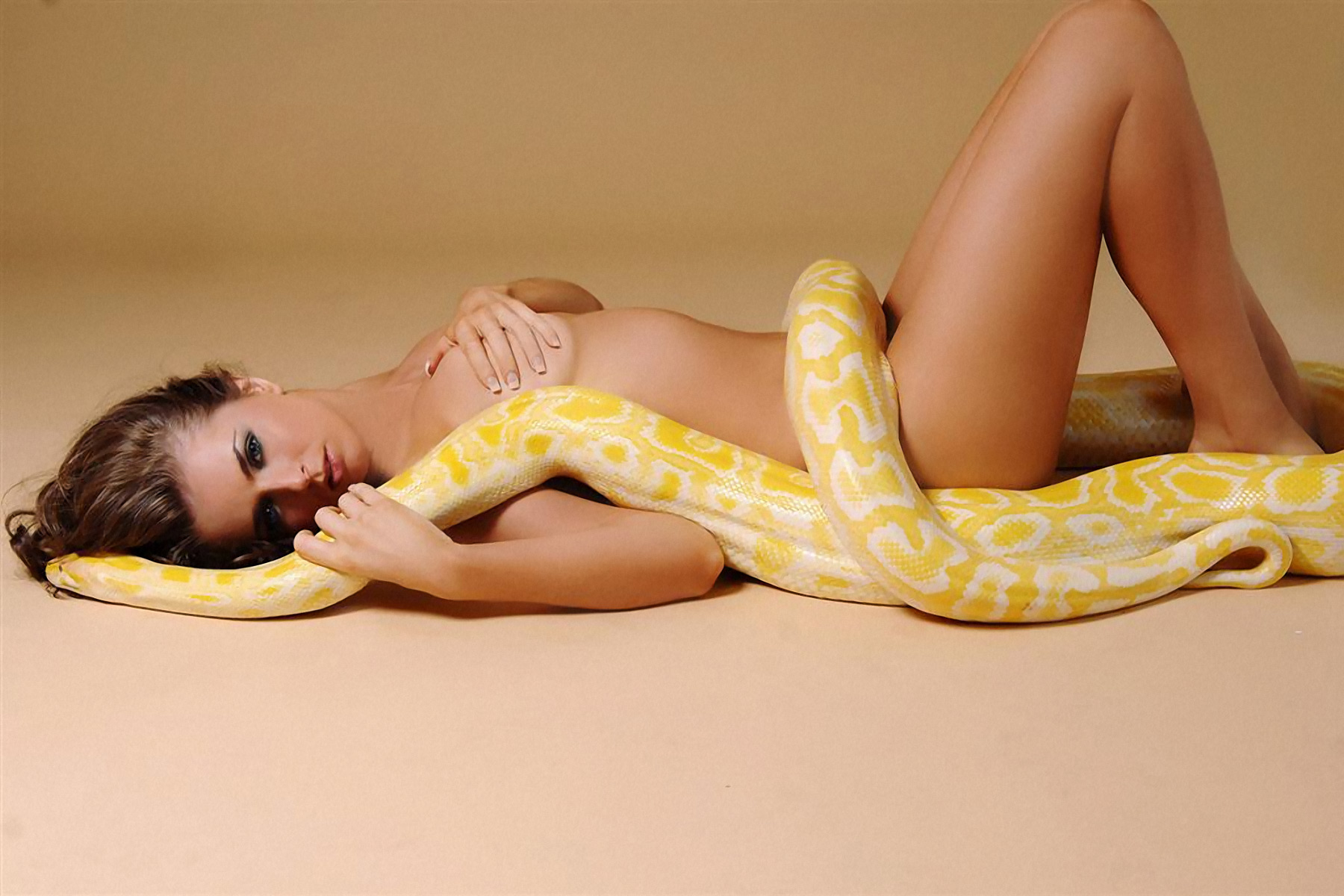
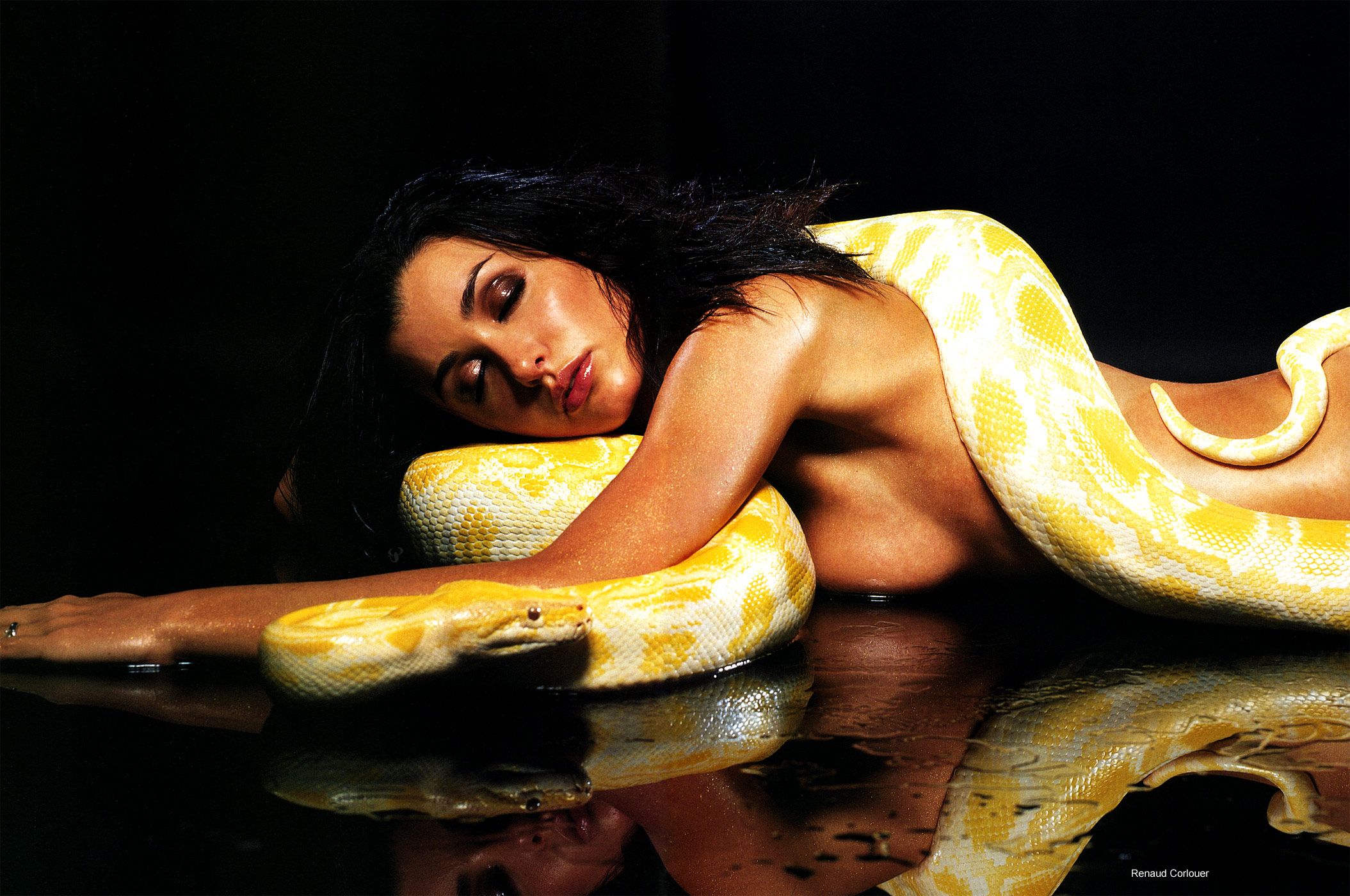
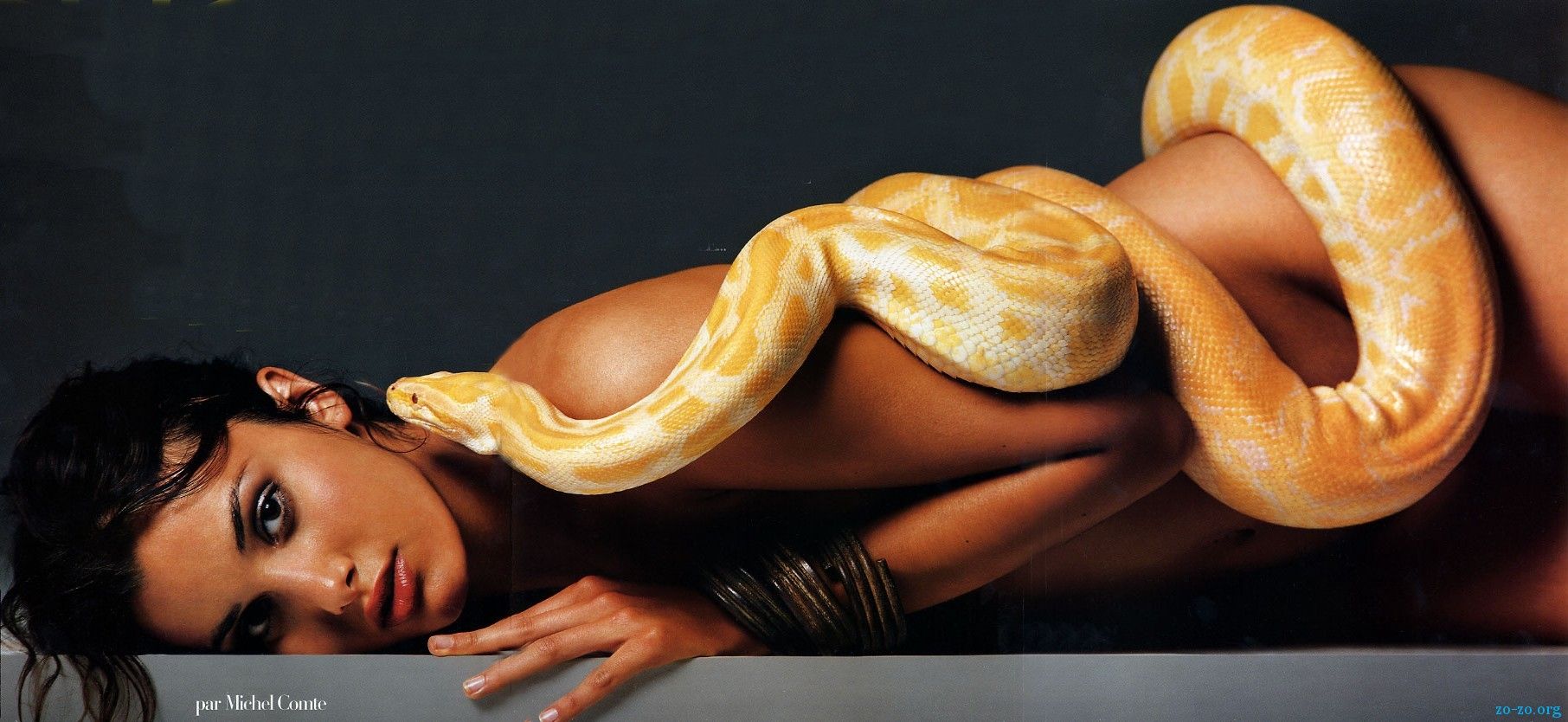
And the apple doesn’t fall far from the tree, it appears – even if the fruit comes from the tree of forbidden knowledge. For Nastassja’s daughter Sonja has already embraced her mother’s fondness for snakes, on not one, but two separate occasions. In the 400th edition of Photo magazine in June 2003, Sonja posed with an albino Burmese python for Michele Comte. And eight years later, she played Eve in a 2011 advert for Pom Wonderful, certainly evoking the image of her mother’s iconic photo,three decades previously. Adding to the Kinski connection, the commercial narration is by Malcolm McDowell, who appeared alongside Nastassja in Cat People.
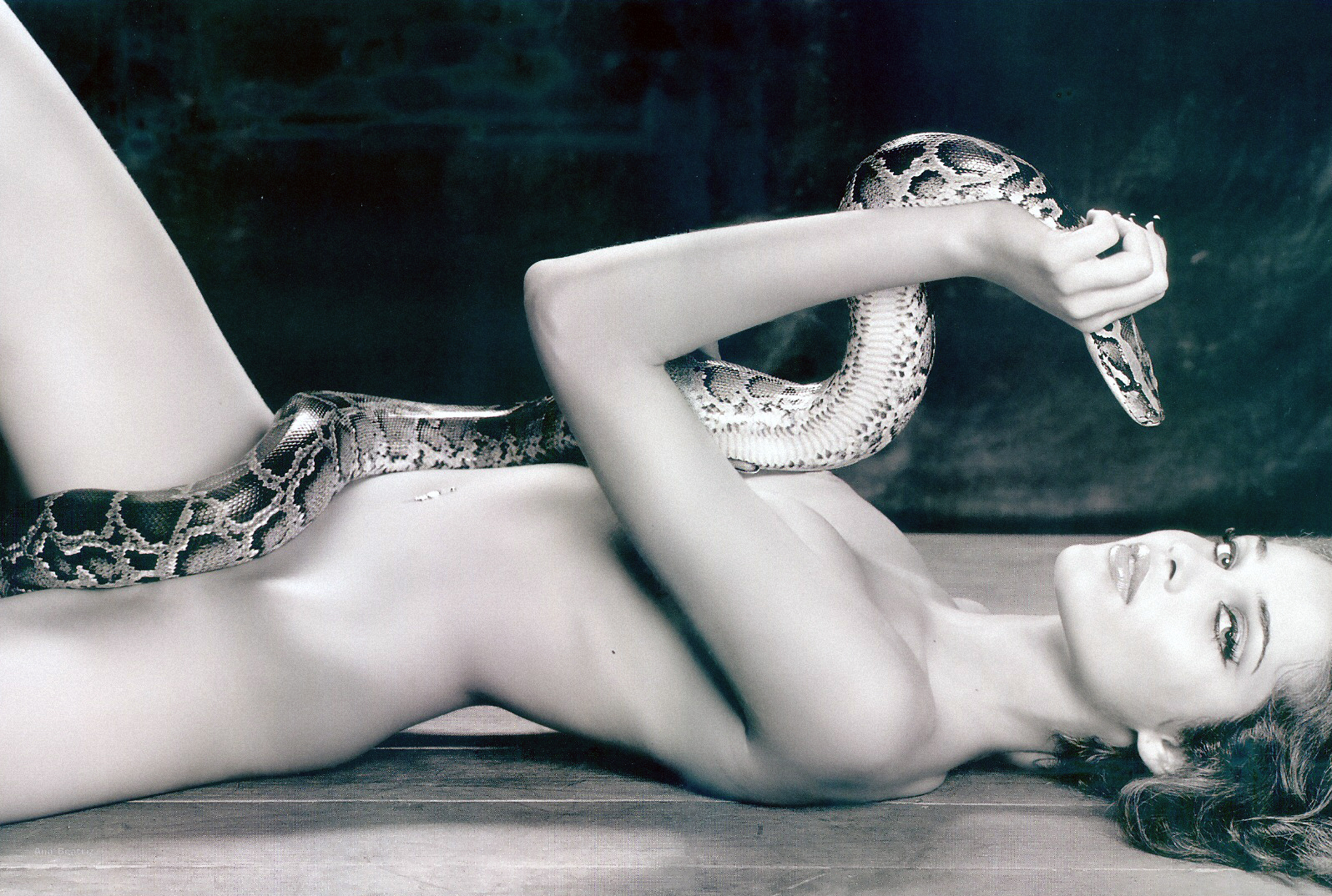
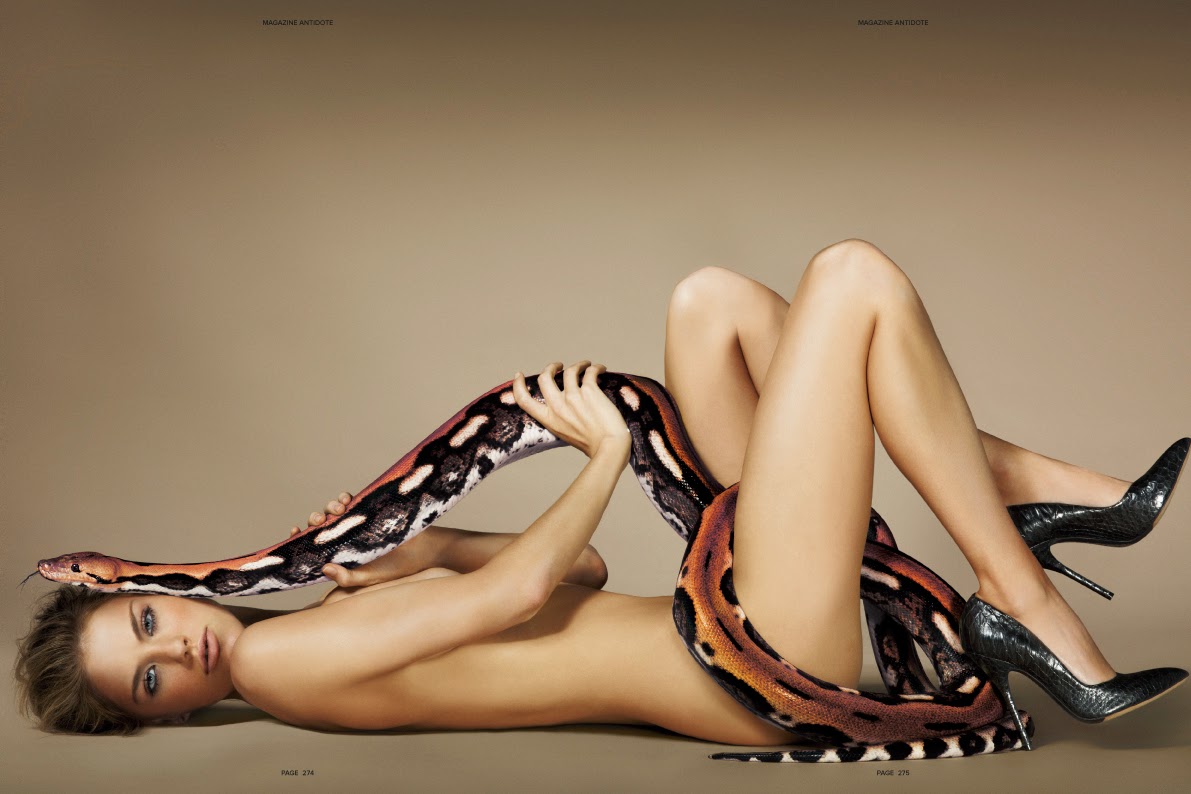
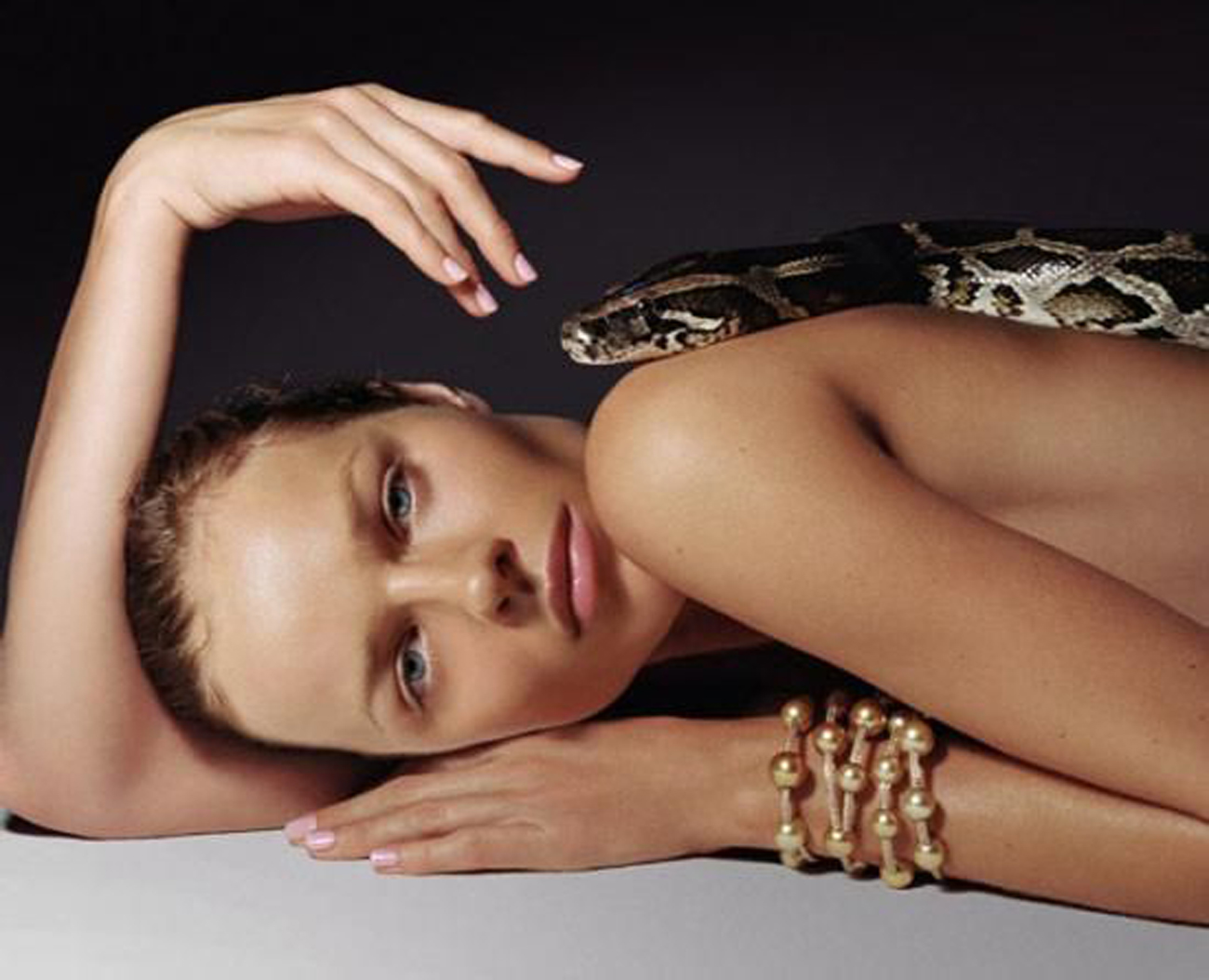
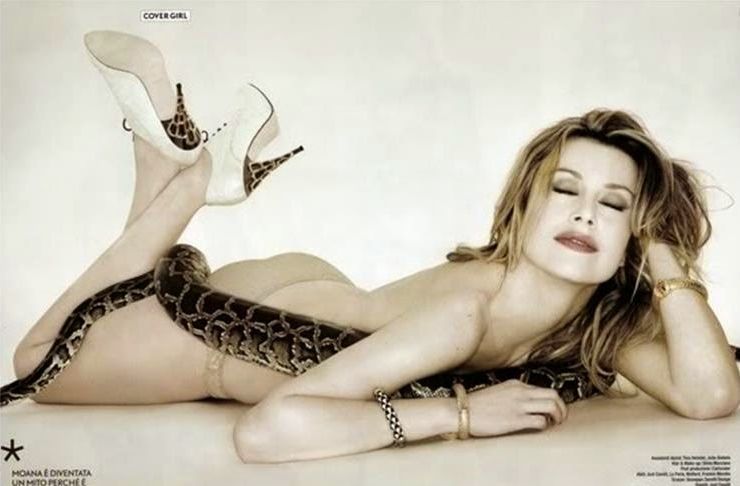
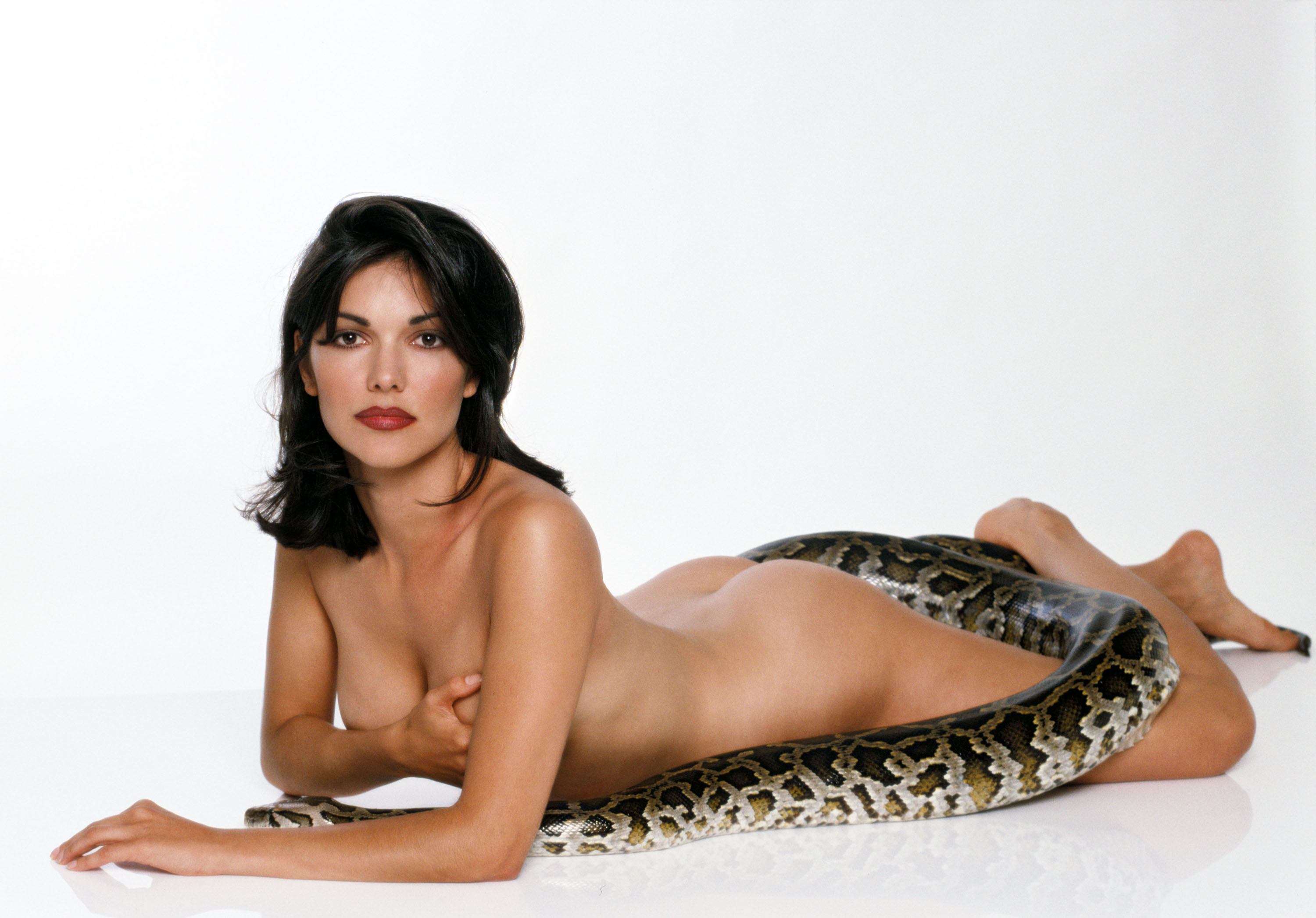
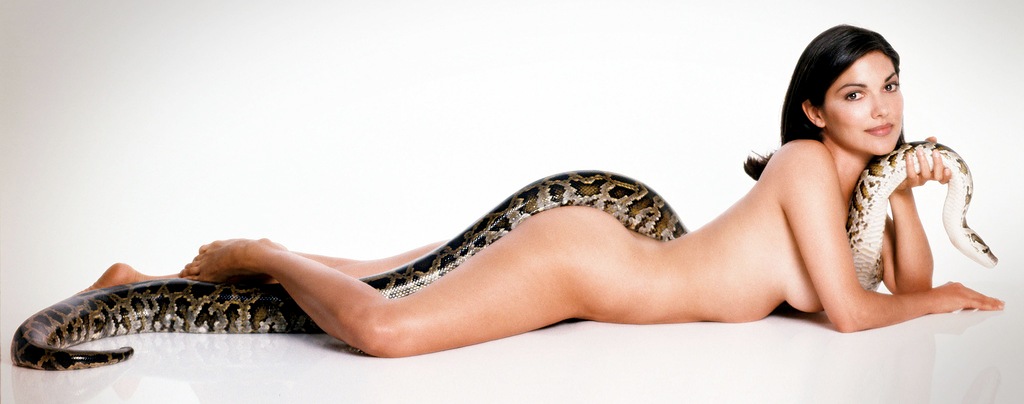
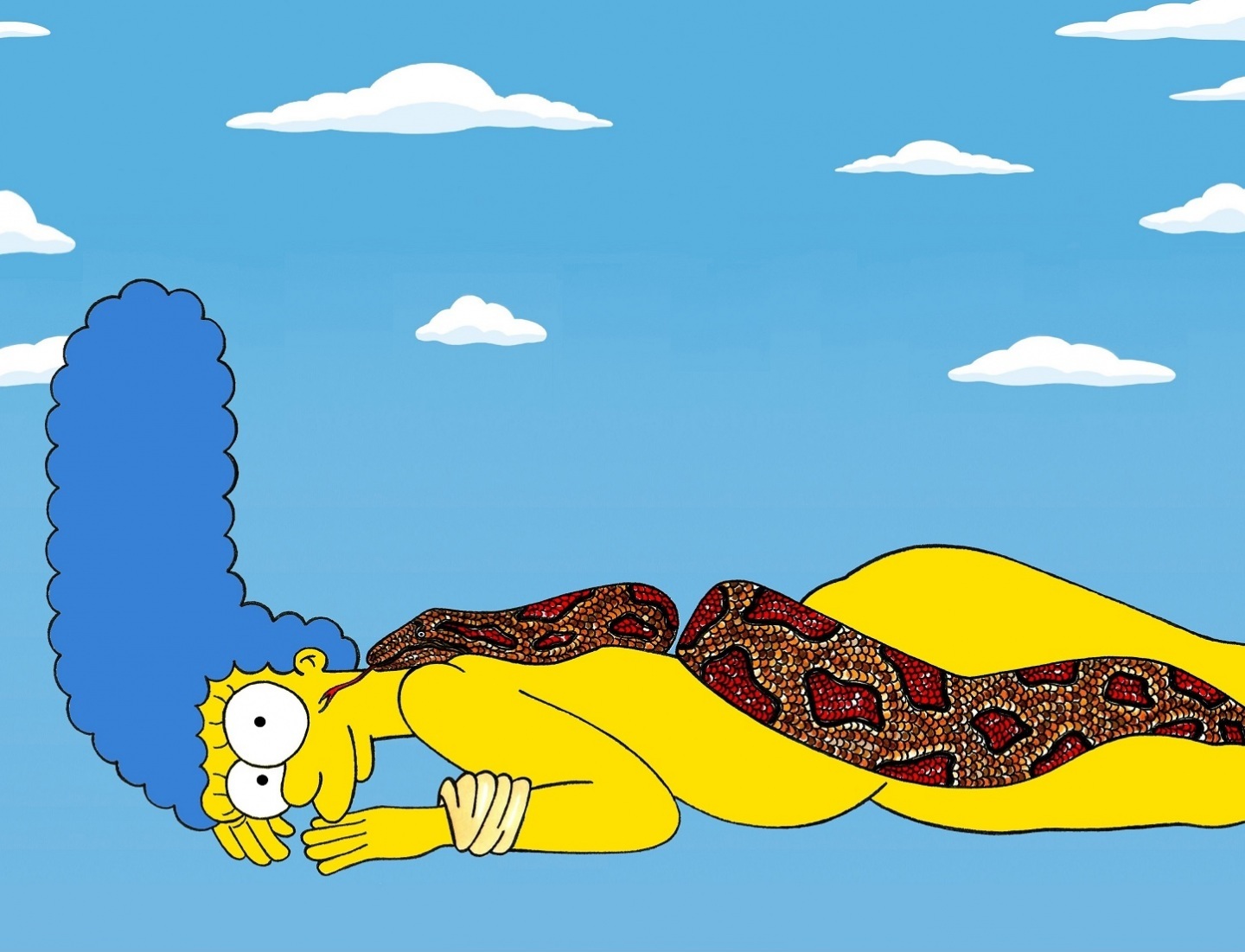
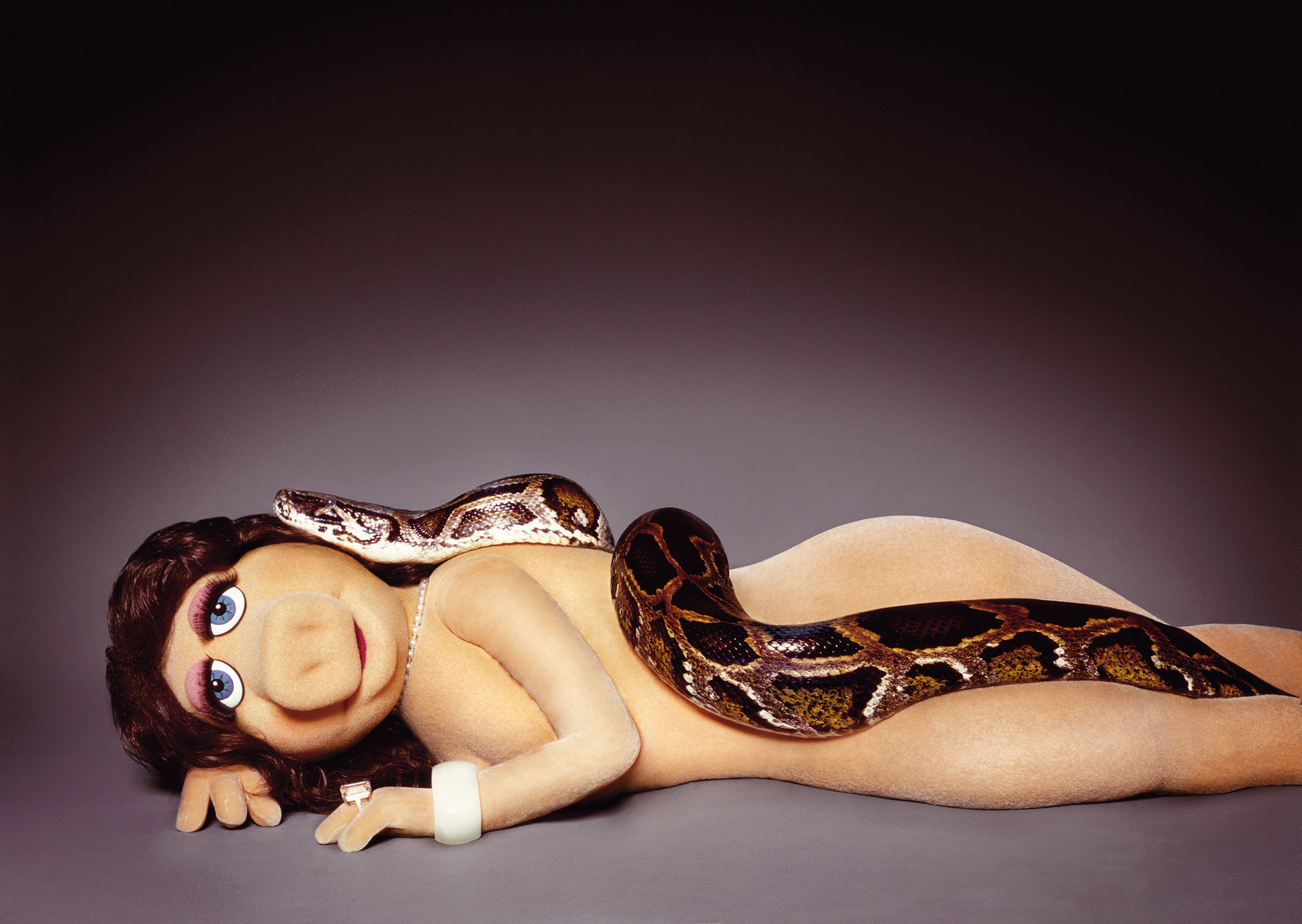
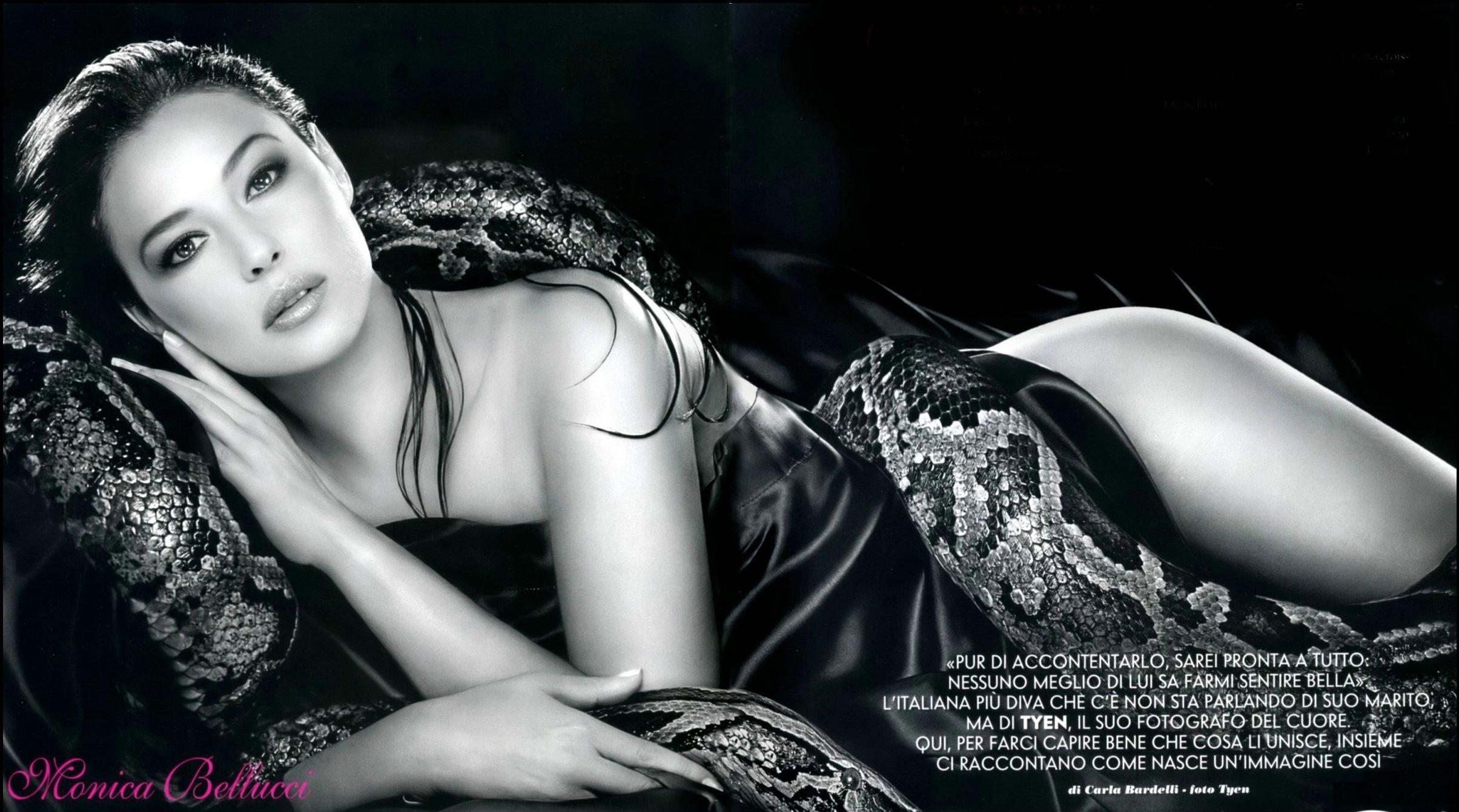
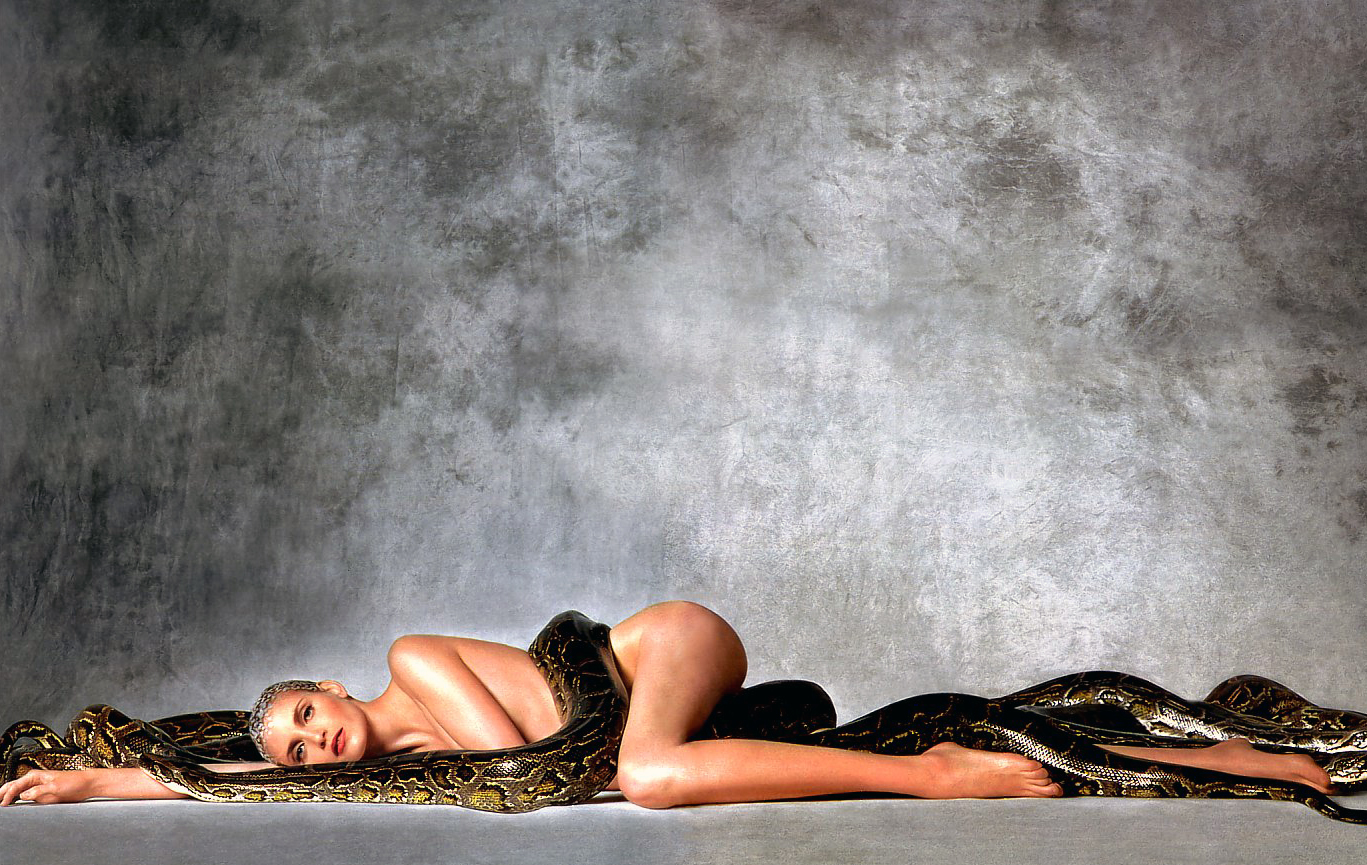
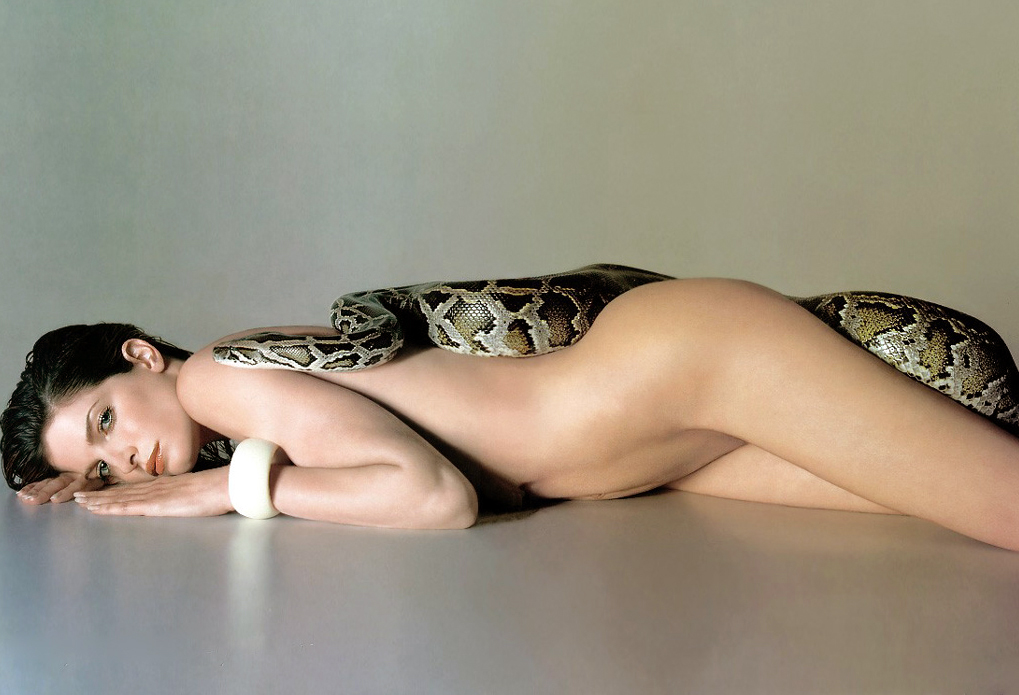
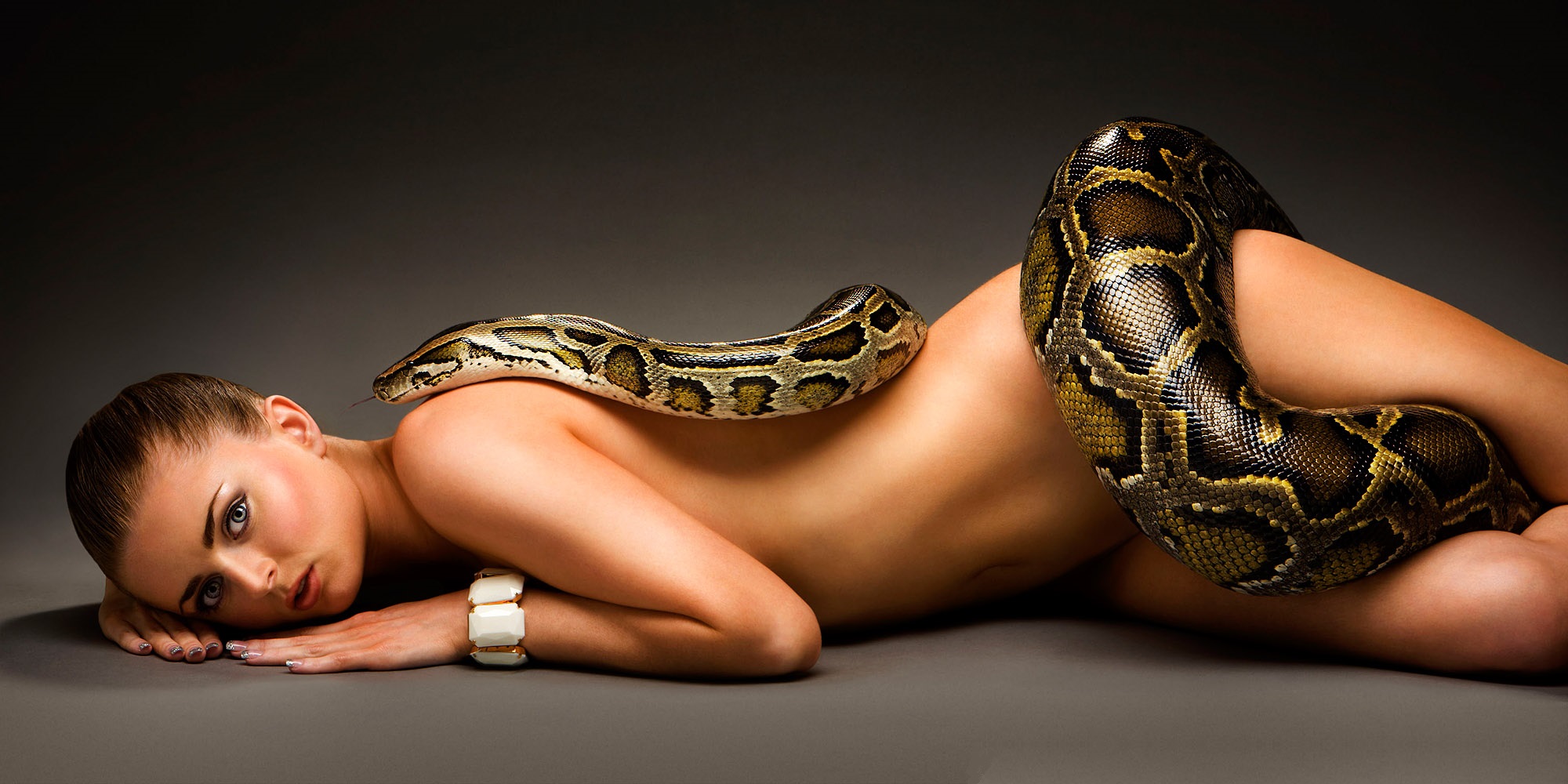
The sheer range of imitations is startling, even if we restrict ourselves fairly narrowly, to images specifically depicting a model lying naked on the ground, with the snake on top of her. [And that’s just the tip of a very large reptilian iceberg!] There are photographs involving women, men, puppets, animated characters and even Legos. Some of them put their own spin on the concept in one way or another. Others are shamelessly derivative, right down to the bracelet: perhaps that’s simply a metaphor for the Ouroboros which is the fashion industry, forever eating itself.
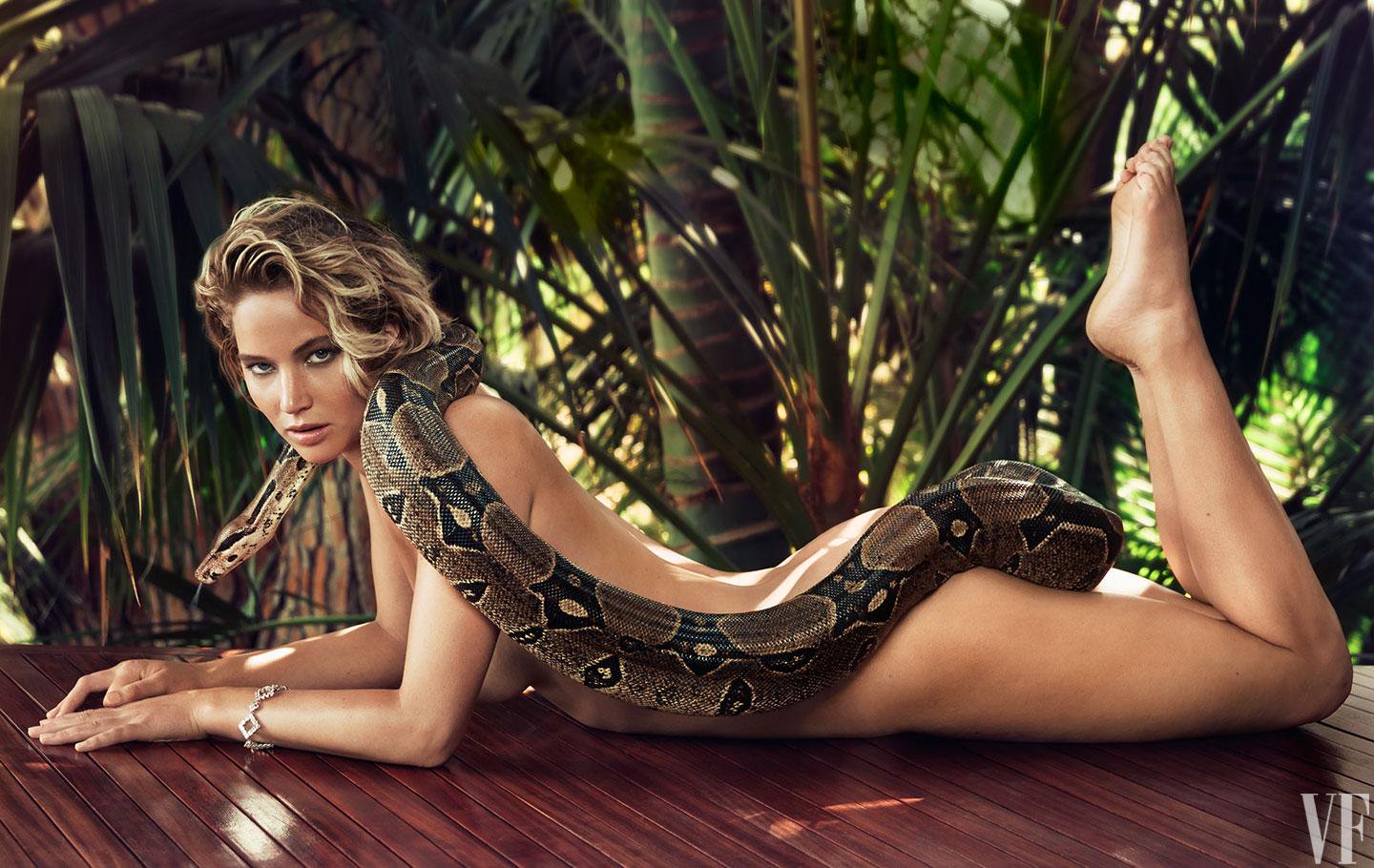
The most recent of note saw Oscar winner Jennifer Lawrence pose with a Colombian red-tailed boa constrictor, in a shoot for Vanity Fair by photographer Patrick Demarchelier. Per reports, “Lawrence only became uncomfortable when the snake took a fancy to her neck.” [Are you listening, Polly Mellen?] At least this was an open Avedon homage, though not everyone was impressed. One writer criticized Lawrence’s “dead-eyed pout… look again at that Avedon portrait of Nastassja Kinski. Look at how grounded she looks, how serene by comparison. Though equally naked, she seems less exposed somehow.” Shot in July 2014, Lawrence’s pic wasn’t released until February the following year – perhaps due to the subsequent leak of her iCloud photos. It still promptly broke the Internet.
After having spent more time than I care to consider trawling various depths of the web, part of me has to wonder if the style has perhaps gone beyond iconic to cliched. However, such is likely the fate of all high art which achieves a place in popular consciousness, and all the subsequent copies, knock-offs and homages do absolutely nothing to detract from the qualities of the original. It remains iconic and much-imitated for good reason, an exemplary case in what happens when artistry and good fortune come together for a fleeting moment. The results are near perfection, and I would argue, Nastassja and the Serpent deserves to be ranked among the great art pieces of the twentieth century.
Sources
I want to mention some places on the web which were of particular help in writing this piece, both for information and images.