Dir: Rotimi Rainwater
Star: Shenae Grimes, Marshall Allman, Austin Williams, Nastassja Kinski
It’s odd that, at the time of writing, this is now Nastassja’s sole feature appearance in over a decade, since Inland Empire in 2006. Two things are particularly strange: it’s little more than a meaningless cameo, and comes in Rainwater’s first feature – I can’t even see anything on which he worked in another capacity, where he might have met her. Still, good on him, especially since this is clearly a work from the heart, and indeed, personal experience. For, in his late teens, Rainwater spent nine months living rough, on the streets of Orlando. He was lucky enough to escape, but never forgot the experience: it informed not only this feature, but his subsequent documentary, Lost in America.
However, passion and writing what you know isn’t enough, in itself, for a feature film to succeed. I’m almost entirely in agreement with the Variety review, which described it as, “A well-intentioned attempt to illuminate the plight of homeless youth,” then said it “falls flat in [a] dramatically inert narrative debut… Its compassion and careful sidestepping of exploitation tropes can’t make up for a fundamental lack of depth and urgency in the storytelling.” As a slice-of-life depicting life on the street, it has an air of authenticity. The problem is its efforts to impose dramatic structure feel so half-hearted, I suspect Rainwater would likely have been better off not bothering at all., as with the documentary.
The movie focuses on Sugar (Grimes), part of a loose-knit group of homeless kids and young adults, whose base is in Venice Beach, California. She has been on the streets for a while, after a car accident which killed both her parents left her suffering from PTSD. Her closest friends are Marshall (Allman), a former Mormon who is her boyfriend, yet has an escalating issue of substance abuse; and Ronnie (Williams), a younger kid who bailed out on the foster system after one too many bad homes. They survive on a mix of pan-handling from strangers, charity from local stores, and the occasional hand out from Bishop (Wes Studi), a charity outreach worker who is trying to build trust with the deeply-suspicious Sugar.
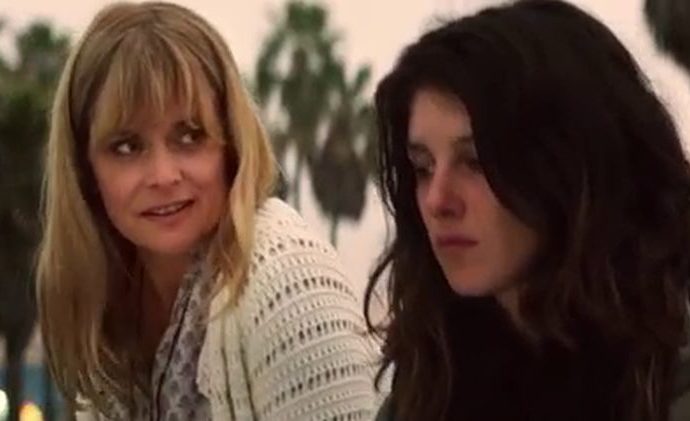
The tepid drama ensues when Sugar’s uncle Gene (the always reliable Angus Macfadyen) shows up in Bishop’s office, offering to take her home. Time to find out whether Sugar meant it, when she said, “Everyone says they wanna help, but nobody really does anything. I wish someone really was there to help.” For one of the themes here is perhaps a strange double-standard of the homeless. They need assistance. They want assistance. But when it’s offered, as often as not, it’s thrown back in the helper’s face. We see that particularly with Kinski’s character, Sister Nadia. She first appears (top) interacting with Ronnie, giving him five bucks to help her hand out fliers for her homeless mission. When Sugar sees that, she heads right over and marches Ronnie away from what she perceives as Nadia’s threat.
This is part of the dilemma we faced when dealing with homelessness: what may be best for them is not necessarily what the homeless think is best for them. It has to be frustrating, and as an outside observer, it felt kinda off-putting, like the casual lies Sugar and her gang told to “normals” to get money out of us. If anything, it feels like Rainwater soft-pedals the harsher elements of homelessness a good deal, perhaps for fear of coming over as exploitative. Sugar’s back story seemed implausible, and certain elements depicted here, came across to me almost like they were promoting urban camping as a lifestyle. You too can spend your days hanging out at the beach and skateboarding! Who needs to work, when you can live off the efforts of others! I get the feeling this is not quite the impact the maker intended…
Sometimes, though, you can see the homeless have a point. Ronnie, for example, steadfastly refuses even Bishop’s help, fearing it’s a trap to get him back into a system, of whose abuse he has first-hand experience. But there’s nothing to suggest Sister Nadia’s motives are anything except pure, or that her charity has a hidden agenda. Not that we get to see much of them, or indeed, her. Kinski’s only other scene of note is near the end, when she sits alongside Sugar on a bench (below). It’s almost like she had a day off, was visiting Venice Beach where she saw the production, and offered to help out. Cue Rainwater frantically scribbling a part for her on the back of a napkin.
Grimes and the rest of the mostly young cast do what they can with the material, and are generally solid enough, and are reasonably convincing, if perhaps a little too polished and articulate. It’s easy to forget their background is more in things like 90210 and High School Musical. The drama, such as it is, comes towards the end of the film. Part of Sugar (or Shelley, as Gene knows her) does want to go with her uncle; however, she is reluctant to leave Ronnie and, to a certain extent, Marshall to their fates. She presents the latter with an ultimatum after she discovers his promise to kick the habit is an empty one, and it’s that which propels things to their final denouement. Not that there’s much tension here either, beyond will she or won’t she go off with Uncle Gene?
While I didn’t hate this, to be clear, it’s striving too earnestly to be worthy, coming over rather too much as the cinematic equivalent of The Road to Wigan Pier. If it turns out to be the end of Kinski’s feature career, there will be a certain irony present. For her filmography will (as far as English-language films go, at least) have ended as it began: with her playing a nun, as in To The Devil a Daughter, 37 years previously. Yet should this be a parting shot, it will be one which does her little, if any, justice.

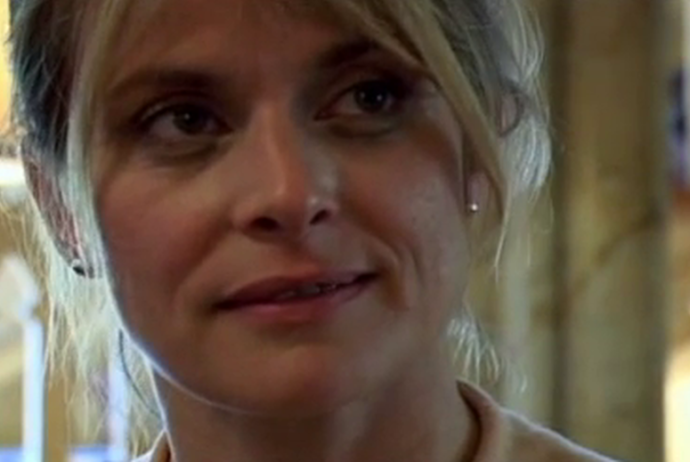


 Remember when cloning was the Next Big Thing? Or course, there have been clone movies around for a long time; 1978’s The Boys From Brazil was probably the first to take the idea mainstream. However, there was a five-year period, roughly covering 2000-04, when they seemed particularly fashionable, including things like The 6th Day. What almost every clone film, regardless of era, seems to have in common is their cautionary nature. Whether it’s Multiplicity or Godsend, cloning is rarely if ever depicted as a boon to humanity. Stuff goes wrong, because this is, it appears, firmly filed in the box marked “things with which mankind is not supposed to meddle.” And so it proves here, inevitably.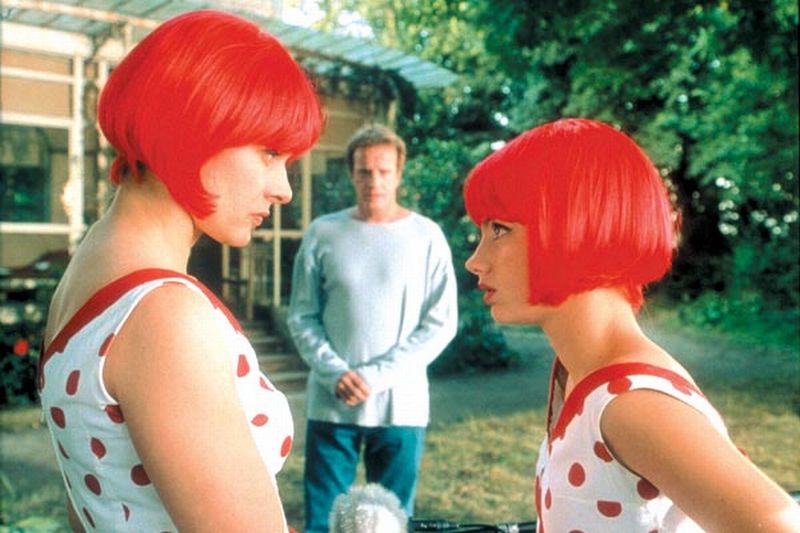
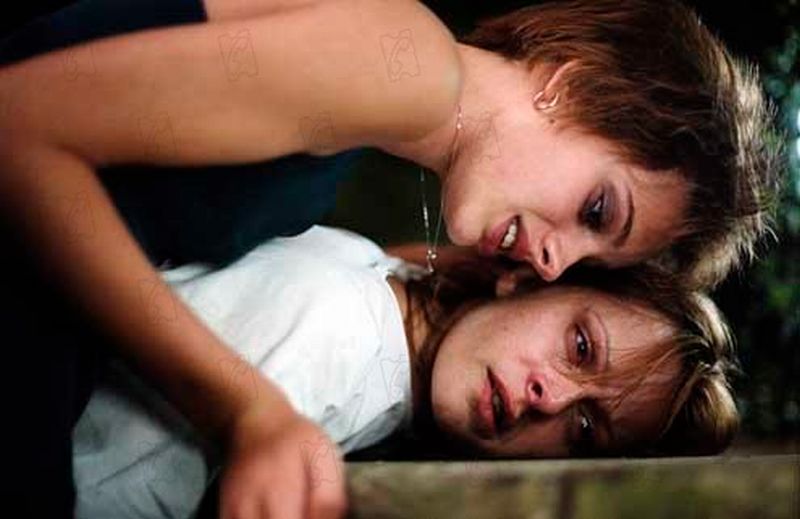




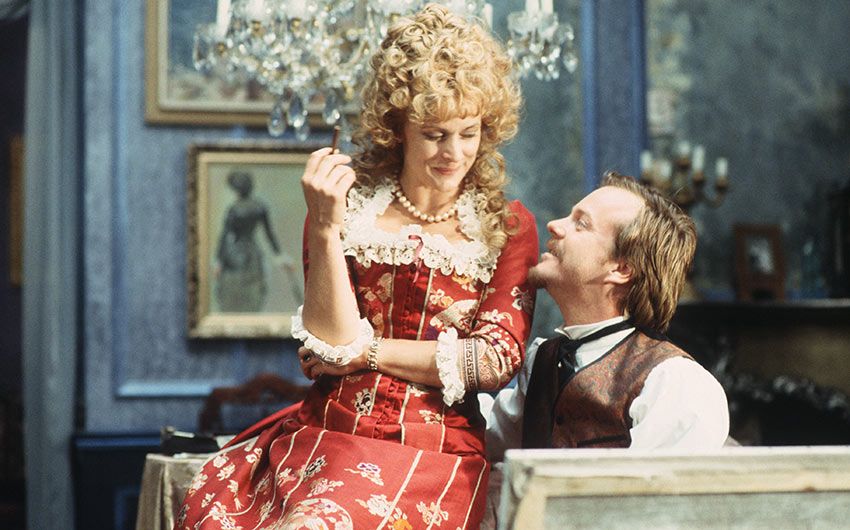
 The change in setting works perfectly well. It’s a story that is easily adaptable to any time and place where there are the “idle rich” – those with nothing better to do than play vicious games with other people. Technically, the production design is well above what you might expect from the phrase “TV miniseries”. It looks luscious: Jean-Paul Gaultier was involved in the costume design for the Marquise de Merteuil, and it’s likely also heaven for fans of classic cars. It sounds pretty damn good too. Frequent David Lynch collaborator Angelo Badalamenti provides the music, some cues in which reminded me of Jerry Goldsmith’s ominous yet melodious score for Basic Instinct.
 Deneuve does rather better, displaying icy control throughout: that she still falls somewhat short, is less indicative of her own shortcomings, than the monumental awesomeness which was Glenn Close. I may be biased with the Pfeiffer comparison, but I found Kinski’s portrayal as the principled – to the point of saintly – Marie de Tourvel fractionally superior. This is a character which has to be
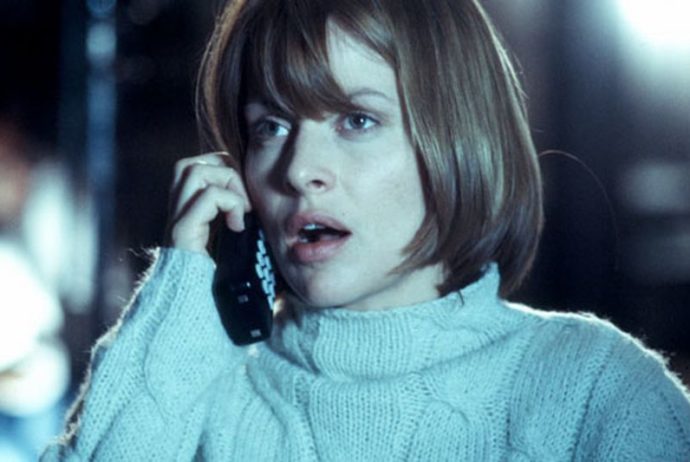
 Things do not improve once you get past this. Sondra, in a wheelchair after some leg-injuring incident that is never explained, is left alone to occupy her hi-tech, voice-activated house, when her husband, Ben (Roger Daltrey, for some inexplicable reason – if you’ve read this far, you’ll know this isn’t even the most questionable rock star cast in the film) goes off on a business trip. Poking around his computer, she guesses his password and discovers Ben has been cheating on her in cyberspace. She goes into the same room, meets his virtual mistress, but also gets into a flame war with some troll, who decides to show her who’s boss, by killing the mistress and sending Sondra a video of the event.
 I lost track of the number of occasions I realized I had given up paying attention at all to the film, and had to rewind it back to where I had drifted off. Probably eight or nine, at least. About the only scene that makes any impact is one where Matheson is speaking to another agent, and she does a surprisingly accurate description of what would, a few years down the line, be known broadly as the Dark Web. Everywhere else, the film propagates a depiction of technology which is about on a par with the depiction of marijuana found in Reefer Madness. Oh, and B-movie queen Julie Strain turns up briefly as an exotic dancer. She may be the only cast member who should not be embarrassed by this.
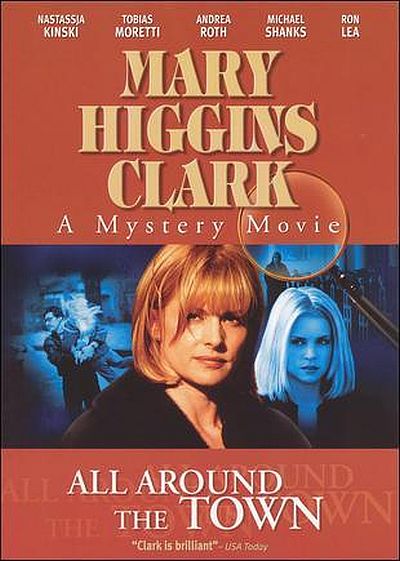 This proves a problem with regard to her English teacher, Alan Grant, who is receiving hot and steamy letters from a mysterious unknown woman – much to the chagrin of his wife, Karen (Kinski). Alan eventually realizes the handwriting is a match for Laurie, but when confronted, she angrily denies it, in an argument that draws too much public attention. Which is unfortunate, because the next day, the teacher turns up stabbed to death, with a knife taken from the Kinmount house, and Laurie has no memory of what happened. For it turns out her psyche has reacted to the trauma of the abduction by splintering into multiple personalities. One, Debbie, is based on her four-year-old self, another, Kate, is a super protective persona inspired by her mother… and as Margaret Cho once said, then there’s the ho, Leona. Guess which one was writing the notes, and lurking outside Alan’s window?